

course
Tripwire Reviews BBC Maestro’s Alan Moore Writing Online Course


Does He Know The Score?
Tripwire’s contributing writer Dave Jackson takes a critical look at BBC Maestro’s Alan Moore writing course…
The late, great comedian Peter Cook once met a stranger at a party who asked him what he was working on. He told the stranger about the TV show, comedy gigs, etc., that were in the works and asked him what he was doing. “I’m writing a novel”, said the stranger. “Ah”, replied Cook, “I haven’t written one either…” Should you ever encounter a resurrected Peter Cook and wish to save yourself from possible embarrassment, or if you simply want to be a better writer, you might want to try Alan Moore’s BBC Maestro Storytelling course; £80 will get you six hours of digital tutorials from the great man. It’s certainly a big ‘un. At six hours long, it may not be Ulysses, but it’s certainly a Herculean task, thankfully broken down into six parts, with sub-chapters and, courtesy of the whopping 67 page PDF course notes document, homework-style exercises to put all that stuff into practice. As he himself says. “You’ll depart from the course with a lot more knowledge about being a writer and the degree of thinking it entails, how to navigate your way successfully around the various bedevilments any writer is going to face. I will share with you the importance of progressing as a writer, of continually moving on and trying new things in order to stop yourself becoming stale and stagnant. But is he successful…?
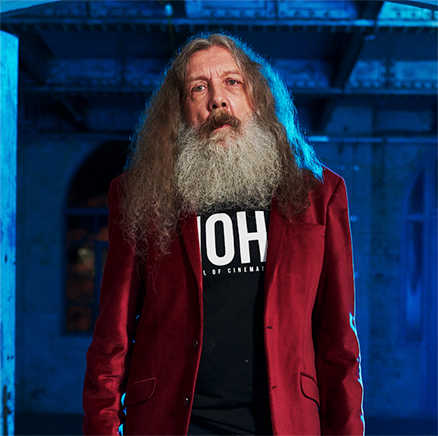
I once watched a documentary on Alan Moore. Much of it consisted of the great man sitting stock still in front of a swirling psychedelic backdrop, his ravaged eyes staring hypnotically into the camera as he rambled about palaeolithic shamen, their influence on his corner of the DC Universe and such. Alan is a great spoken word performer and the use of “structure’, “different angles” and “cutaways” (!) allows you to absorb what he is saying rather than feeling as if you are being inducted into some kind of cult. It’s an ambitious project beginning with the origins of storytelling and its importance in allowing humans to rationalise the world, and taking the student on a journey through language, structure, cast and setting, differing forms of storytelling and the possible evolution of writing. He places a great deal of importance on reading and analysis (writers should always be readers!) and suggests some great ways to widen your horizons, step outside your comfort zone and beat the nefarious monster that is prevarication. The tutorials are just the right length and the accompanying exercises are both playful and creative; using historical slang in a story, dissecting and recreating a story you don’t like (“solve et coagula’), reading dialogue aloud into a mirror shouldn’t be a problem, but writing a paragraph or poem using only one vowel is like eating soup with a fork! This course is more about stretching your parameters and creativity rather than becoming a Moore clone- “Don’t write like I write, do what I did in terms of thinking.”
Although most people would have come to Alan’s work through comics, this seems to focus predominantly on prose storytelling and its different forms and structures. He does cover writing for the screen and poetry too, (including two spoken word performances), but there is relatively little on the discipline that made him famous. He touches on the making of the brilliant and sadly out of print Brought To Light, world-building for Top Ten and the deconstruction process behind his reworking of Swamp Thing as well as a few tips on the tricky balancing act between art and text, but there are a few things I think many people would have liked to see. Unless you are entirely self-publishing, you will inevitably have to deal with others and sadly there is nothing on collaboration or developing good working relationships with artists, editors, etc. Despite Alan waxing lyrical over avant-garde styles, which will undoubtedly push your limits, I suspect the majority of people buying this course would be interested in telling more mainstream if not straightforwardly genre-based stories. Without wishing to tread on Robert McKee’s toes, writers interested in genre might want some tips on motivation and plot engines. Who is my protagonist, what do they want/ why right now/ what stands in the way/ what happens if they succeed/ what happens if they fail, and as the late Mark Gruenwald said, how does the protagonist achieve this in a way that is unique to them? Answers on a used fiver…
I love Alan Moore’s work. Warrior magazine got me back into comics after several years away – “In Pictopia” is possibly my favourite short comics story of all time. This course is a worthy endeavour. It could only ever serve as an introduction to storytelling, but despite my caveats, it’s a great way of challenging yourself as a writer and developing the confidence and motivation to continue. But as he says, write responsibly and “don’t write Mein Kampf”…
People can access the course online here













You must be logged in to post a comment Login