

Comics News
Tripwire Interviews Peter Milligan


In Good Company
Tripwire’s contributing writer Paul N Neal spoke to British veteran comics writer Peter Milligan about a career in comics…
Paul: Peter, can you recall the first comic you bought and enjoyed?
Peter: Ok. The first comic I remember enjoying was probably the Beano, though it would have been bought for me. Probably the first comic I bought and thought, “this is a bit different”, was 2000AD. As I kid, I was never a huge comic or superhero fan, but this seemed like something different.
Paul: Can you say what was your first published work and how it happened?
Peter: I wrote some short stories for a long-defunct and forgotten post-punk expressionist publication called VOMITUS. I think my story was about a skin infection I was suffering from, a kind of Book of Job in a council flat. Sometime later I started writing Future Shocks for 2000AD, a publication that’s very much not defunct or forgotten.
Paul: Would you be able to explain how you felt when you were first published in 2000AD?
Peter: It felt amazing to be a part of something that felt like not so much a comic but a movement.
Paul: Could you describe the origins of Bad Company for 2000AD and what the story means to you?
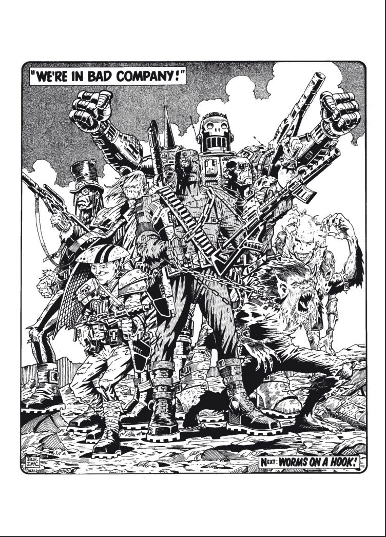
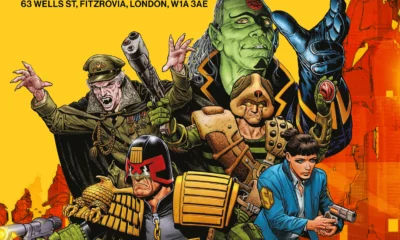
Peter: It was early in my 2000AD career. Bad Company was something that John Wagner and Alan Grant had initially developed but abandoned. Tharg and his assistant asked if I wanted to do something with it, giving me free rein. I liked the idea of a war story so I took the bones of what they had, added new themes and a bunch of new characters and generally made it weirder and mine. I look back on those days with affection, working with the great departed Brett Ewins and the still very much alive Jim McCarthy, going on photo shoots on the set of Full Metal Jacket. We had a photo shoot in a location where they shot. The film had been made, and the crew packed up and had gone away. We just had a photo shoot on this huge location in London where a lot of it had been made.
Paul: Could I ask about Bix Barton. It is a slightly underappreciated 2000AD thrill. I always thought it deserved a little more love. Can you talk about its origins?

Peter: Bloody hell. This strange and perhaps understandably forgotten “masterpiece” really came out of the relationship I had with artist Jim McCarthy, the kind of humour we’d have together, and this was reflected in the story of Bix. It was obviously intended as some kind of future spoof of those classic and creaking old detective British detective stories. Dick Barton was an influence–though I never actually heard any recordings of the radio show I had an idea – rightly or wrongly – of what it was like. It’s funny when you do what you consider one of your minor stories. You might not consider it your finest hour but there’s always the chance that when I die my obituary will be “Peter Milligan, writer of Bix Barton, snuffs it.”
Paul: Hewligan’s Haircut is still loved by many 2000AD fans. Can you describe the origins of the story? Whose idea was it to mix it up from black and white to colour artwork? It has a slightly Pleasantville vibe to it (if the film reference is appropriate), but better.

Peter: Well, that madness! Jaimie and I were hanging out together quite a lot, often in his hometown of Worthing. We talked about doing a new story and I believe that Hewligan emerged organically. Obviously, the name is a portmanteau of our names, and had a pleasing echo of “hooligan”. As for the black and white to colour thing – it’s so hard to pinpoint exactly who came up with that. I certainly wrote it in the script, but this might have come from a conversation Jamie and I had had. The important thing is that I think it worked, revealing Hewligan’s own black and white world transformed when he left the institution. Jaime’s artwork, with its mad colour and energy , was perfect for this moment.
Paul: We should also mention Skin. In the early 90’s, the storyline created a fair amount of controversy. It is a unique work. How do you look back at it?

Peter: Growing up, both Brendan (McCarthy) and I saw kids who were suffering from the effects of Thalidomide. Years later, I think Brendan drew a picture of a “thalidomide skinhead” and the story developed from there. We wanted the whole thing to have the sense of an urban legend – but I still wanted there to be a lot of elements in it that really rang true, that were personal or emotional. The story of its publication or initial non-publication was interesting and I think revealing. I think the problem some people had with it was the mix of sex and disability. That made a lot of people uncomfortable (of course, uncomfortable was exactly what we wanted people to feel). It was also a working-class tale. Martin, our hero, wasn’t some loveable poetic type rising above his disability in a heart-warming way. Martin wanted to be like the other yobs. He wanted to get his hands in a girl’s knickers. Most of all, he wanted revenge.
Paul: Can you compare working for 2000AD to DC or Marvel? Did you find it difficult at all?
Peter: Not difficult at all. In America the kind of stuff I was mostly doing had either Vertigo or with a Vertigo-ish edge, you could deal with more adult and ‘edgy’ themes, maybe. That said, 2000AD had occasionally quite political themes – in Sooner or Later I dealt with youth unemployment. 2000AD was and is quintessentially British and being British I was obviously closer to certain cultural references and language than I was with American publishers. Though these were interesting challenges rather than difficulties per se.
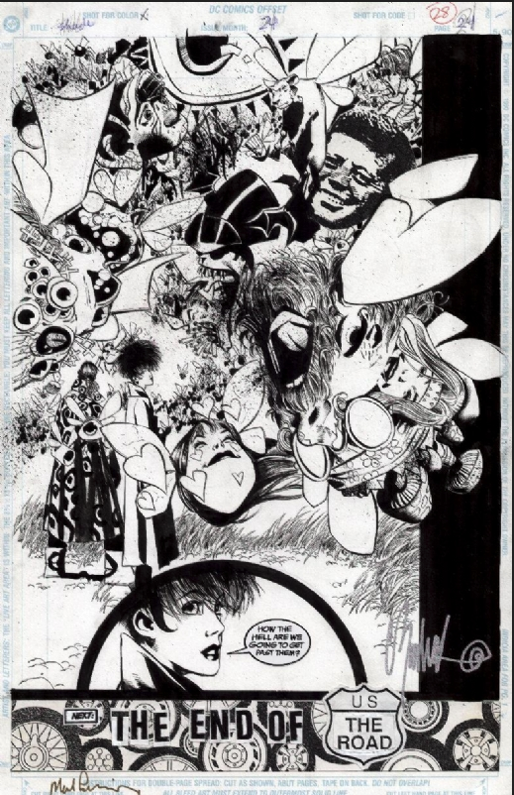
Paul: Shade the Changing Man was incredibly successful. I worked in a comic shop at the time, and it sold in huge numbers. Is there a Vertigo issue or title you are especially proud of? How was Chris Bachalo to work with?
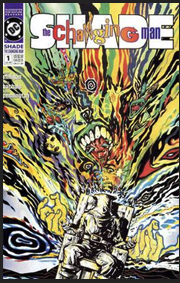
Peter: Chris was great to work with on Shade, it was pretty early on in what would become his stellar career and he obviously had a lot of talent and was smart. Mainly I just wrote the script, full script, sent it to him and he drew it. If he had any questions he’d put them to me, but mainly it was very straightforward. I wrote, he drew.
Paul: The entire Covid experience was awful for so many. It also halted the entire convention scene for so many comic fans, but can I ask whether you enjoy convention and signings? Do you enjoy being a celebrity in the comic community?
Peter: It just depends on the people and the place. Sometimes it’s great, occasionally a bit of a pain. My last convention, in Erlangen, Germany was terrific. It was a small con that was well laid out, really nice people. My next con will be in Belgium, which should be good.
Paul: Have you ever been what you would consider “Starstruck” or met any famous celebrities that made you do a double take at all?
Peter: I’ve met what you’d call celebrities. Never been starstruck.
Paul: Can you name the “celebrities” you may have been lucky enough to meet? Were they nice people?
Peter: Nah, let’s not go there.












You must be logged in to post a comment Login