

Comics News
Author Makes Startling Discovery In Deceased Friend’s Attic


A Forgotten Piece Of Horror Comics History
When UK horror author, Jasper Bark, helped catalogue the comic collection of his recently deceased friend, he didn’t know what to expect. He had no idea he’d make such a momentous find among the long-neglected long boxes. Nor did he think he’d be unearthing a forgotten chapter of horror comics history. By Joe Collins…
Before we get to the find, let’s take a little look at the history of American horror comics.
Long before the video nasties scare in the UK. Decades before the Satanic Panic surrounding Metal and its subliminal messages. And way before Tipper Gore wanted to slap Parental Advisory labels on rap records, one much maligned medium felt the full fury of the moral minority and was driven to near extinction.
That medium was horror comics. In the early 1950s, superheroes were old hat. Crime and Horror comics dominated the newsstands, with violent and explicit covers that promised even greater thrills within. Bill Gaines’ EC Comics led the field, with the best artists in the business, but there were plenty of competitors. Every comics publisher put out a roster of horror comics, each and every month. Atlas, the forerunner to Marvel Comics, were EC’s biggest competitor with many horror comics written by a young Stan Lee.
Sadly, after six glorious years, the runaway success of the horror comics proved to be their undoing. So many were sold that conservative parents and well-meaning activists began to question their effect on young children’s minds, even though it’s been argued that the audience for these comics was, for the most part, of high-school age and above. Comics were juvenile fare, therefore these comics were responsible for juvenile delinquency.
Horror comics were dubbed the “ten-cent plague” and Colliers magazine ran a feature accusing them of being the “Horror in the Nursery”. Psychiatrist and pop culture hater, Frederic Wertham published a book called Seduction of the Innocent lambasting horror comics. Presidential hopeful, Senator Estes Kefauver launched a televised senate subcommittee meeting looking into the connection between crime and horror comics and juvenile delinquency. To avoid government censorship, comics publishers banded together to form the Comic Code Authority, a self-governing body that policed comics and banned any reference to crime or horror.
The following year, in the UK, the government passed the Children and Young Persons Harmful Publications Act, banning crime and horror comics. The Act was renewed in 1965 and publisher Len Miller was even taken to court in 1970 and fined £250 for reprinting horror comics from the US. Campaigns were also launched throughout Europe and as far afield as New Zealand and Australia.
No other artistic medium has suffered such worldwide censure or been the target of such concerted efforts from the media, the government and concerned citizens groups. Horror comics are probably unique in the level of opprobrium they attracted in the mid 50s. As a result, many publishers were driven out of business and more than half the writers, artists and editors employed in comics found themselves out of a job, more or less overnight. Most of these individuals quit the industry altogether and some, like comics legend, ‘Ghastly’ Graham Ingels, refused to acknowledge their comics work at all.
This makes it very difficult to learn anything about the often anonymous creators who thrilled, chilled and appalled an entire generation of comic readers in the 1950s. As Jasper was to find out when, in return for his help selling the collection, the family of his friend let him keep a few items.
One of the things Jasper found was a set of engraver’s proofs for Weird Chills #4 a Key Publications horror comic dated 1954 and Chilling #6 from Stanley Publications dated 1971. Engraver’s proofs are unbound and uncut pages that printers would produce for publishers to ensure the printing matrices they had were correct and there were no errors.
When he did a little more investigating, Jasper was thrilled to find that neither Weird Chills #4 or Chilling #6 had actually been printed or distributed. For whatever reason, both comics were never released by their publishers. His excitement cooled when, after a bit of investigating, he found that they mainly consisted of reprints from previous publications and neither comic had ever been given a cover.
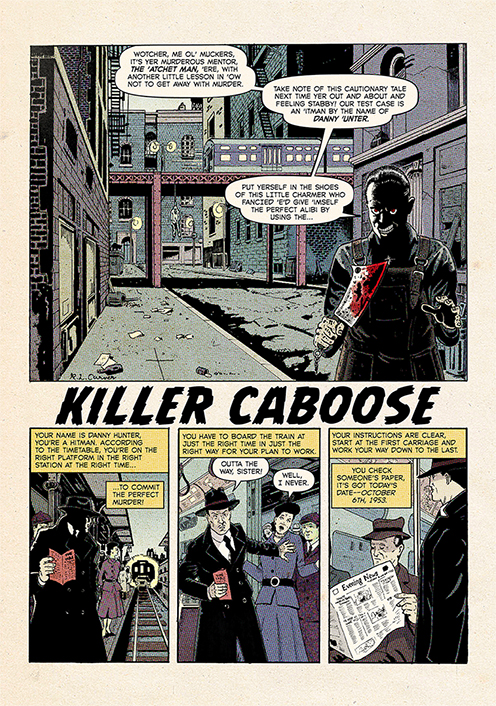
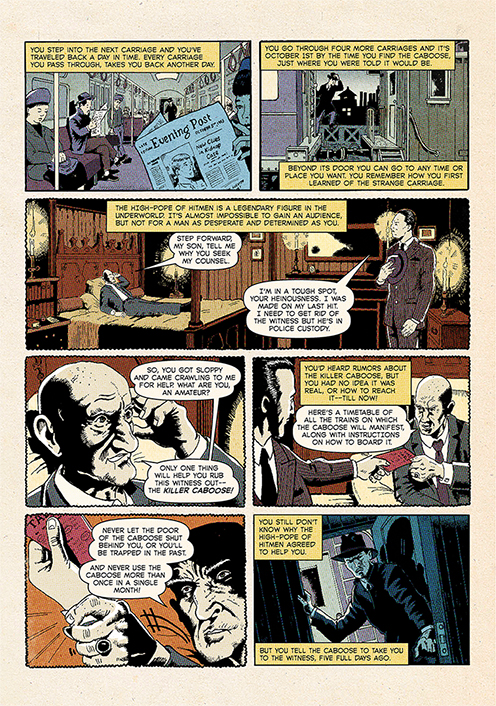
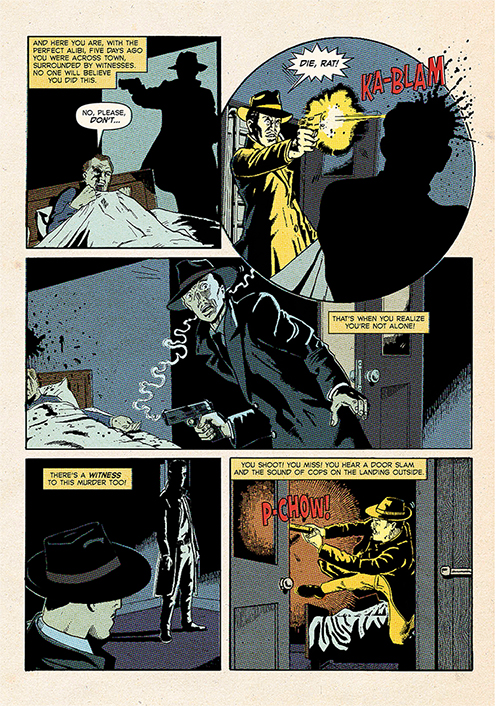
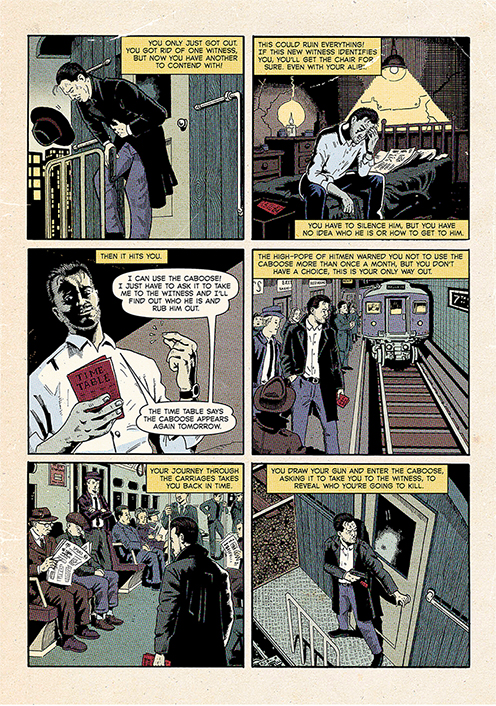
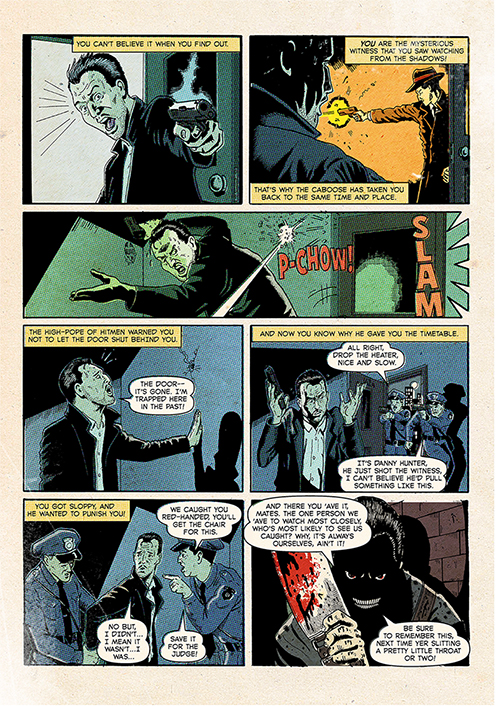
Only three stories, across both comics, were original and they were all signed by the same artist – R. L. Carver. Jasper takes up the story: “I’d never heard of Carver and I couldn’t find any information about him online. It seemed like no one had ever heard of him. I contacted some people who are much better at research than I am and they weren’t able to find much more. According to census records, a family called Carver moved to New York from Louisiana in the 1930s, that might have been when the artist was a child. There’s someone called Reginald Carver who was on the payroll of Sonnenfeld Studios in the early 50s. Sonnenfeld Studio were the biggest rivals of the Eisner Iger Studios, formed by Jerry Iger and Will Eisner to package comics for the big publishers. But that’s really all I found out, there’s a bit of speculation, but nothing concrete.”
This isn’t the first time Jasper’s looked into obscure artists. “About ten years ago I wrote an article for the This Is Horror website about the little known cover artist Bill Alexander and, as a result, his widow contacted me on social media.” Jasper’s hoping to do the same thing with R. L. Carver. So, he reached out to Tripwire to post one of the original stories he found, in the hope that someone out there, knows something about the artist R. L. Carver and might get in touch.
You can reach Jasper here:
jasper@jasperbark.net
Twitter: https://twitter.com/jasperbark
Facebook: https://www.facebook.com/jasperbark/
Instagram: https://www.instagram.com/barkjasper/
So, for the first time ever, Tripwire is proud to present the never before seen story – Killer Caboose from Weird Chills #6!
Enjoy:





You must be logged in to post a comment.