

Film News
Captain America: Civil War Review

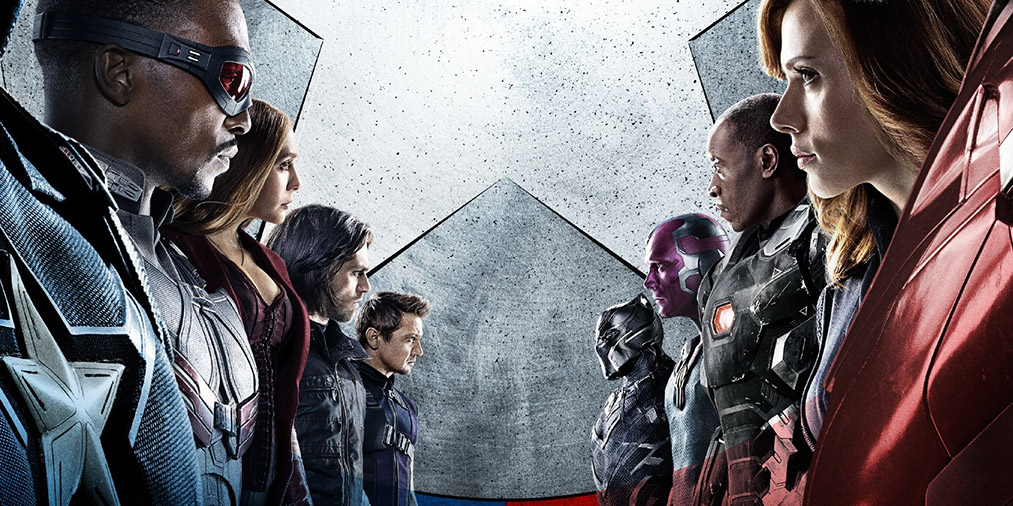
Stars and Strife
♦Tripwire sent Senior Writer Andrew Colman in his spandex costume into the Marvel Universe to review the Russo Brothers’ Captain America: Civil War
Captain America: Civil War
Directors: Anthony Russo, Joe Russo
Stars: Chris Evans, Robert Downey Jr, Scarlett Johansson, Sebastian Stan, Anthony Mackie, Don Cheadle
Hot on the heels of DC’s light-hearted extravaganza, Batman Vs. Superman, we have Captain America: Civil War here to beguile us – another 150 minute tour de force destined for success and fan approbation, and the 13th episode in the Marvel Studios franchise. After so many entries in the canon, it would’ve been easy for the filmmakers to churn out another cookie cutter instalment to keep everything chugging along, but it is to the Russo brothers’ credit that this may well be the best and most well-thought out Marvel film of all.
Having super-heroes fight each other, either individually or in teams, is by no means a new concept in comics, and indeed stretches further back than the original Marvel era, when Stan Lee’s wisecracking creations took it in turn to beat each other to a standstill before discovering a common enemy. Thematically there are significant overlaps here with DC’s recent slugfest, namely the often catastrophic consequences of immense power, and the redundancy of super-beings who seemingly attract or create more problems than they solve.
Based on the comic story arc from a decade ago, the film is basically Winter Soldier and Age Of Ultron part 2, a sequel to two sequels. Despite being what could be just another chapter, the film rewards the diehards with a decent script, far better characterization and a genuine sense of moving matters forward around what is a very straightforward plot – the schism between two factions of the Avengers, led by Captain America (Chris Evans) and Iron Man (Robert Downey Jr.) respectively, instigated and engineered by Helmut Zemo (Daniel Bruhl). The fallout arises from collateral damage inflicted by the heroes on a mission in Wakanda, which, through Zemo’s machinations and a government mandate, leads to the super-team being proscribed, and to all intents and purposes, shut down. Tony Stark / Iron Man, wracked with guilt after meeting the mother of one of the victims, opts to stay within the enforced ruling, while Captain America, loyal to the brainwashed Bucky Barnes / Winter Soldier (Sebastian Stan), decides to go against his cohort’s wishes, basically splitting the team in two in the process.
The first half of the film, eager to explore the angsty undercurrent of super-heroism, is a deadly serious affair, with the two team leaders subtly acknowledging the inevitability of this internal conflict. What could’ve been a risible set-up featuring the usual clichés and platitudes, turns out to be remarkably assured, with all the characters in the ensemble given time to expand and flourish without allowing the plot to drag. Although certain characters remain fairly two-dimensional (Johansson’s Black Widow, Elizabeth Olsen’s Scarlet Witch) others, such as Don Cheadle’s War Machine and Anthony Mackie’s Falcon play pivotal roles, which emphasize their relationships with their friends and comrades. Also of note is Chadwick Boseman’s Black Panther, whose outsider presence in the film avoids contrivance, his backstory and motives sufficiently palpable. Granted, giving every character their own inner dialogue and “arc” means that the film seems rushed and occasionally plodding at the same time, with the obligatory breaks for action often undermining momentum, especially in the battle royale sequence involving a particularly brattish Spider-Man (Tom Holland) and Ant-Man (Paul Rudd) – two lightweight, incongruous figures who appear to have stormed in from another film, no doubt to create a comedic interlude before the portentousness ensues again. To be fair, even the knowing humour here works better than expected, with Spider-Man wittily criticised for talking too much and cracking jokes mid-bout, which is something that “super-heroes would never do”.
Captain America: Civil War, like all its predecessors, had to find ways of avoiding the usual pitfalls of stifling genre and inflexible formula – something the film’s producers were no doubt aware of, which, as before, led them once again to pretentiously invoke such cinematic heavyweights as Seven, Fargo and above all The Godfather as influences – an unnecessary measure, given that they were essentially conflating two previous film strands. And there were other concerns (albeit moot!), as well, among fandom – was this an Avengers or a Cap film? Was the expansive hero roster and tacked on cameos a tacit admittance that Captain America was not able to carry his own film?
Oddly enough, far from being a cynical effort that goes through the motions, such as Iron Man 2 and 3, the Russos are only guilty, if anything, of trying too hard and overthinking – but for the most part, everything pays off substantially. Bruhl’s devious yet comprehensively human Zemo is a decent corrective to the standard planet-busting endgame, while the denouement is handled sufficiently well, with both leads certainly turning up. This is more of an actor’s film than expected, despite the silly videogame sequence that threatens to disrupt everything – Downey Jr. notably wanted more involvement in the production, and his input shows. And although the aforementioned (and somewhat over-egged) political and ideological subtexts would always be diminished by the fact that this is still a super-hero film reliant on spectacle, it all seems far more credible than one might have hoped. Kudos also to Chris Evans for managing to develop a character that always lacked breadth and edge.
All in all a slick and confident effort which sustains attention and does, with some reservations, succeed in balancing the required sledgehammer sensibilities with subtle touches and mature storytelling. It’s not without its flaws, obviously – it’s still too long, the tone is often uneven, some of the dialogue veers towards hokum, and Bucky Barnes’s schizophrenic presence is unwieldy and lacks focus. However this is a step forward in Marvel’s spandex soap opera, which had threatened to run aground in Avengers: Age Of Ultron. Rest easy, fanboys and collectors – there’s life in the old franchise yet.
ANDREW COLMAN
Captain America: Civil War is out at UK and US cinemas from Friday 29 April 2016







Legion of Andy
May 1, 2016 at 8:36 pm
A lot to agree with here, Andrew, though I may have enjoyed it more than you did.
I was gripped throughout!
Couple of possible errors, though I could be wrong about some of this…
The Avengers weren’t on a mission in Wakanda, but in Lagos (Nigeria).
Tony Stark meets the mother of a young man who died in Sokovia in Age of Ultron, not Lagos in this film.
Was Zemo involved in setting up the Avengers for the Lagos disaster?
I thought that happened by sheer bad luck, and contributed to the litany of deaths which included New York, Sokovia, etc from previous films.
And that initiated the UN action which led to the Accords and the Accords led to the initial schism.
So Zemo’s actions, IIRC, started only in Vienna.
I think.
I will, of course, be seeing the film again just as soon as I can!
admin
May 1, 2016 at 10:12 pm
HI Legion Of Andy, thanks for your comments. You’re quite right regarding the plot points and the link to Age Of Ultron. And you may well be right regarding Zemo as opportunist rather than instigator – these things are worth clarifying in terms of understanding subtext. In the end it was a compulsive bit of drama that surprised me with its assurance. I may well watch it again when it comes out on DVD.