

Film News
Tripwire Reviews Three Billboards Outside Ebbing, Missouri

Southern Discomfort
♦ Tripwire’s senior editor ANDREW COLMAN just reviewed Martin McDonagh’s acclaimed drama Three Billboards Outside Ebbing, Missouri…
Three Billboards Outside Ebbing, Missouri
Director: Martin McDonagh
Stars: Frances McDormand, Woody Harrelson, Sam Rockwell
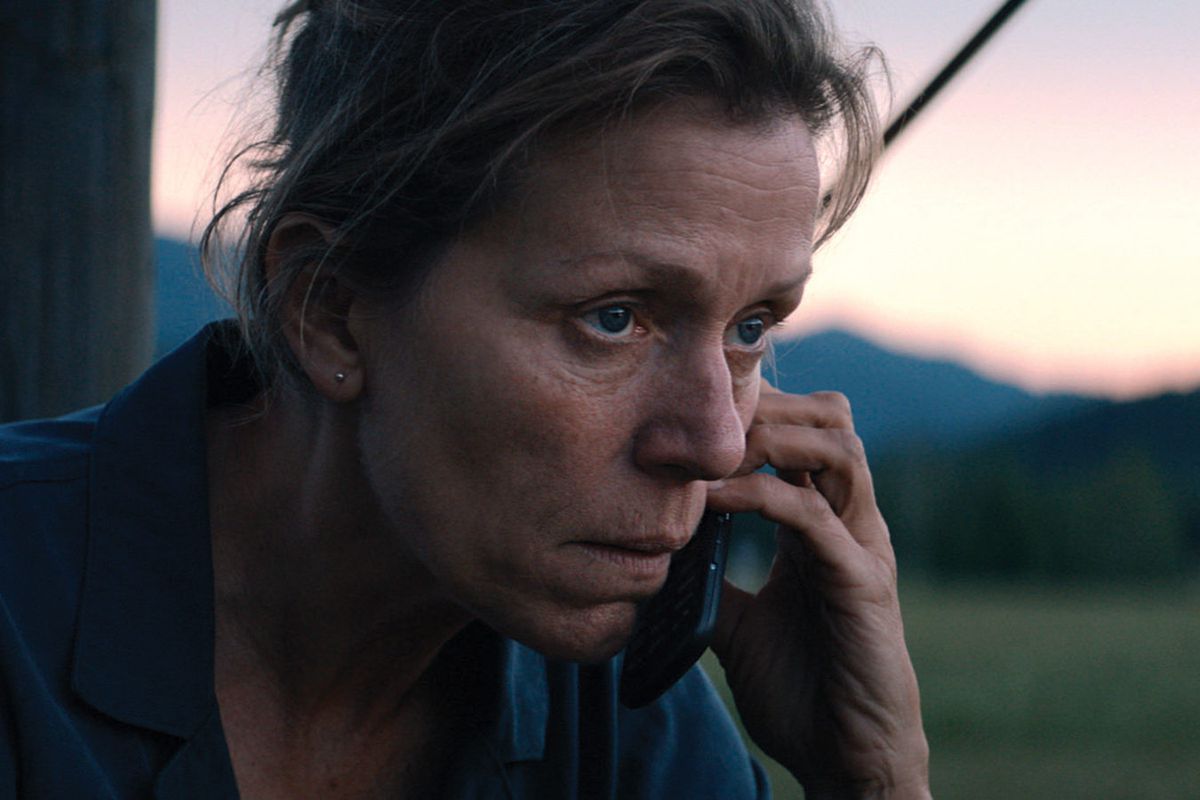
It’s been over two decades since Frances McDormand won the Best Actress Oscar for Fargo. And although she has turned out award-winning work since that film, there hasn’t really been a leading role for her of any such magnitude, until this movie. Writer / director Martin McDonagh’s take on the hidebound mores of a southern backwater town, featuring McDormand as a lone mother hell-bent on seeking justice for her murdered daughter, will give her that second gong.
Unlike last year’s feted Manchester by the Sea, Three Billboards doesn’t seek to earnestly editorialize or provide any answers. It doesn’t even have the pretensions that Oscar-winning films normally carry, its aim being to both entertain, delineate great sadness and helplessness, and ensure that we will laugh when we know we shouldn’t. No character in this film is hero or villain, or at least is not without something redeeming – McDormand’s heroine Mildred Hayes is a vengeful, mercurial force of nature, capable of unthinking aggression alongside her keen humanity. It may be McDonagh’s method of keeping the audience off-balance – we have our expectations, of surly, heartless demagogues determined to crush Mildred’s spirit, yet Woody Harrelson’s Sheriff Bill Willoughby, all gruff monosyllables and tinted shades, is perhaps the most sympathetic character of the cast. The irony being, of course, that the three billboards are aimed squarely at him.
Although by no means a native of Missouri, McDonagh paints a classically grim picture of a place that has lost its soul, with endemic corruption and bare-faced mercenary selfism the norm, while wilfully enhancing it to absurd levels. Officer Jason Dixon (Sam Rockwell) resembles a petulant, inarticulate child prone to casual yet extreme violence, the police force are archetypally racist, while the entire town, including her feral ex-husband Charlie (John Hawkes) is at odds with Mildred, who is utterly inured and resigned to all the opprobrium. Even Red Welby (Caleb Landry Jones), who risks retribution from the police for allowing Mildred to use his company’s billboards, is not without flaws.
The film’s strength is its ability to actually get beneath the skin of Mildred’s malefactors – Rockwell’s Dixon, portrayed for the most part as a borderline grotesque, is given depth by McDonagh – in thrall to a mythically lost era for the deep south, and enslaved by his self-hatred and domineering mother, even he has the capacity for self-effacement and change. Despite being an unshowy actor’s director, McDonagh’s deftness lies in the way the characters can be antagonistic one minute, and almost empathic the next, such is the unspoken mutual understanding of a landscape where violence is the most common form of self-expression. We laugh at Dixon as he serially fails, eventually being turfed out of his job, much to his chagrin, by an African-American sheriff. And yet McDonagh makes us care about him.
At times this tragicomedy (dramedy?) veers into parable, with Mildred’s crusade somehow evading any dire consequences. Regardless of this, the film shines simply because of the committed performances of the entire ensemble – McDormand is pitch perfect, her steely resolve relentlessly bubbling beneath the surface. Harrelson, as the dying Sherriff, is also excellent, exhibiting his maturity as an actor. But special praise needs to be given to Sam Rockwell for taking on such a challenging part and acquitting himself magnificently, despite his character’s innumerable foibles.
One wonders how well this film would’ve done at the Oscars in the early 1970s, when Hollywood was arguably going through its artistic zenith. This would’ve been thanks in no small part of course to the arrival of all the maverick movie brats who were regularly producing downbeat, subversive work that focused on the dark underbelly of American life. I say this as in a way this film belongs to that time, despite the pervasive gallows humour that would’ve been absent back then. Three Billboards doesn’t quite compare to the elegiac classics of that era, as it’s a very good film rather than a great one. But it’s still very impressive and occasionally daring, its actors certainly putting in a shift. McDormand is a shoo-in, but the film will no doubt garner other gongs.
Three Billboards Outside Ebbing, Missouri is out in UK cinemas now
Three Billboards Outside Ebbing Missouri review www.tripwiremagazine.co.uk












You must be logged in to post a comment Login