


Comics News
Tripwire Reviews Rebellion’s Essential Judge Anderson: Shamballa


Inside Mega City’s Mind’s Eye
Tripwire’s contributing writer Tim Hayes takes a look at Rebellion’s Judge Anderson: Shamballa out from 23 June…
Judge Anderson: Shamballa
Writer: Alan Grant
Artist: Mick Austin, Arthur Ranson
Rebellion

Rebellion launches a new series of Essential Judge Anderson volumes by following the formula of its Essential Judge Dredd series, and starting in safe territory. Shamballa by Alan Grant and Arthur Ranson appeared in the same month of 1990 as the Judge Dredd story America, both now established as high watermarks for their respective series and never in danger of becoming unavailable. The most recent reprint of Shamballa was in The Best of 2000AD Volume One, which came out only nine months ago, and that didn’t displace the several previous reprints of the same story or its appearance in the chronological archive series Judge Anderson: The Psi Files, all of which remain available. But what has changed in the last year is that Alan Grant has passed away. Shamballa and the other three stories in this volume come from an early stage of the writer’s custody of the Cassandra Anderson character which extended for roughly the next quarter-century, and the achievements in his Anderson stories are always worth fresh consideration, now that there will never be any more of them.
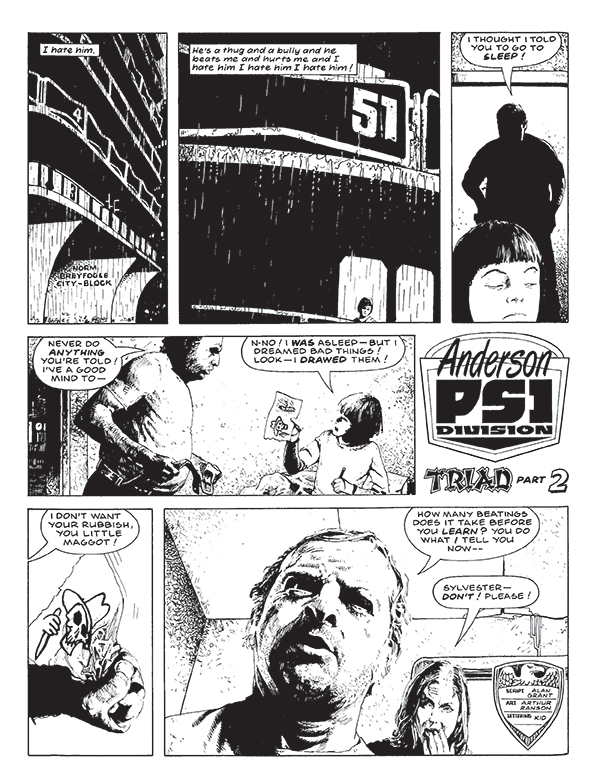
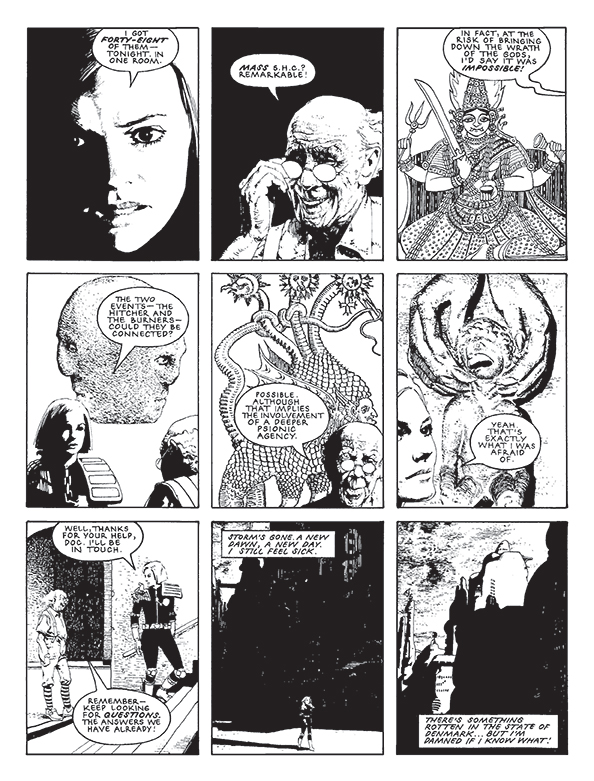
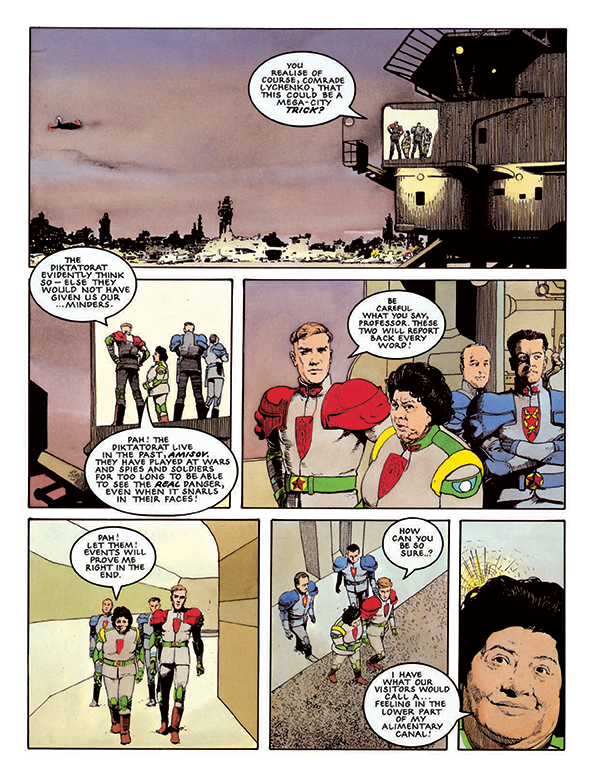
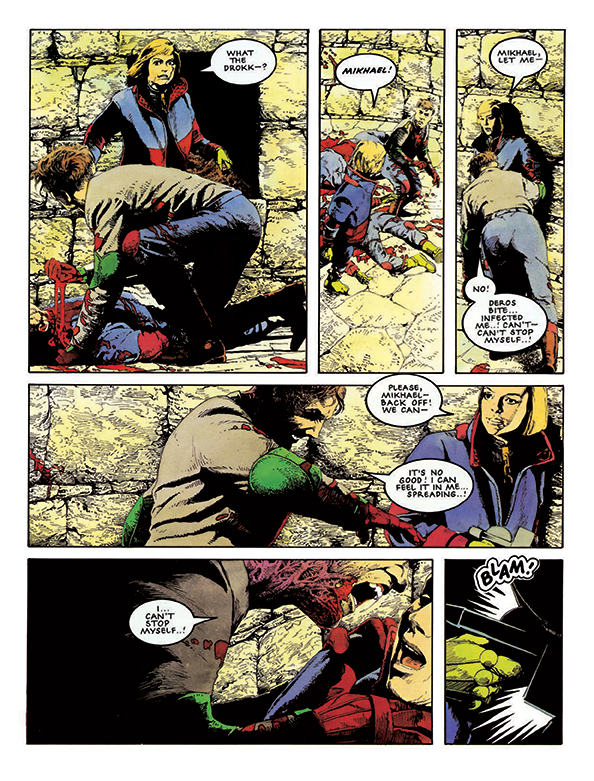
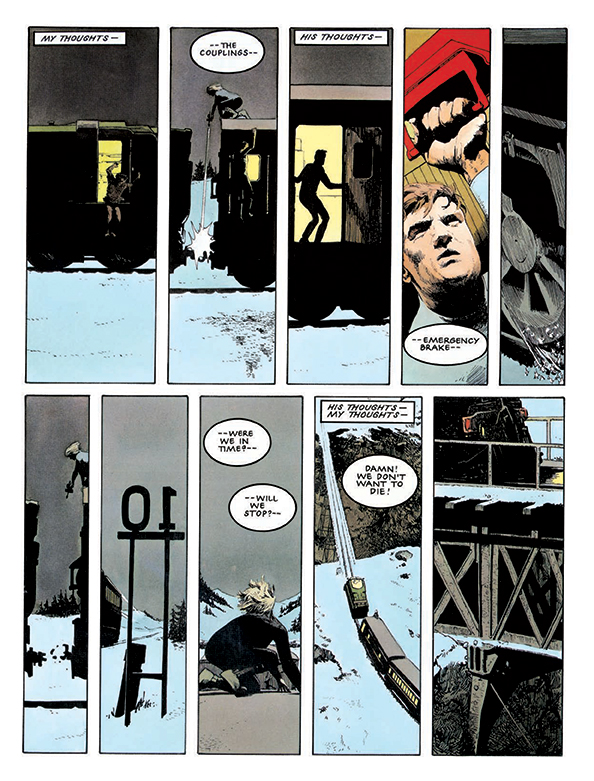
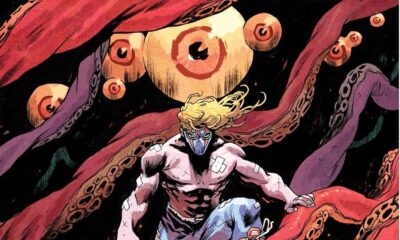
Grant set up Anderson as an empath with a spiritual perspective on a wicked material world, which meant giving her some emotional scars – like the foundational one she receives in Leviathan’s Farewell from 1989, the only strip here drawn by Mick Austin rather than Ranson. The Austin art is fine, feathery ink lines and open white space; but it can’t really compete with Ranson’s atmospheric figure work and emotional faces, plus the artist’s occasional blast of metaphysical drama. Shamballa has Anderson journeying to Tibet to encounter the ancient lama who might really run the world, an extended spiritual odyssey that presents the character with further painful truths and a further loss. The other two stories here are a pair. Triad sets the tone for a lot of Grant’s Anderson tales, combining psychic warfare and the deaths of innocent thousands with jokes about a venue called Ronnie McScott’s and the legend of the Block Ness Monster. A pair of innocent young psychic sisters suffer drastic agonies in Triad before being enrolled in Psi Division for their own good. They turn up again in The Witch? Report three years later as cadet judges, doing some judicial killing of their own before the ages of ten.
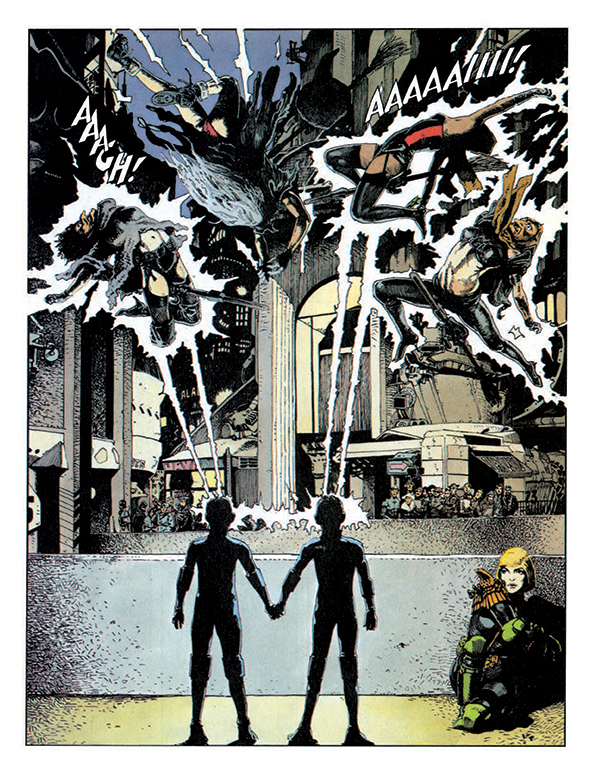
Innocence gets a constant battering in Grant’s Anderson stories, but what interested the writer was how to stop it rotting into cynicism, for Anderson or anyone else. Part of his answer was to treat the stories as melodrama; and compared to the contemporary Judge Dredd stories (even the ones co-written by him) these Anderson strips have a rhythmic tension and release, a direct empathy to go with the satire and violence. That’s not what happens in Anderson stories these days under other writers, where soap opera is the usual form and Anderson is one character is a sprawling cast of many. The two psychic sisters recently returned to the Anderson strip, now capable young women (one technically dead) but burdened with secrets and regrets and sadness, whereas Grant’s Anderson was always finding a way forward even if it was excruciating. The early attempts by the character and her writer to see how that might work out are a statement of intent for both of them.








You must be logged in to post a comment Login