

Film News
Tripwire Reviews Netflix’s The Electric State

Lacking A Real Spark
Tripwire’s contributing writer Paul N Neal tries to understand Netflix’s $320m gamble, The Electric State, available to watch now…
Anthony Russo, Joe Russo
Stars: Chris Pratt, Millie Bobbie Brown, Stanley Tucci

In the later months of 2019, Avengers Endgame was briefly the highest grossing film of all time.
With all this in mind it is understandable a handful of Netflix bigwigs may have seen the Russo brothers as filmmakers they should call upon. So, in 2022 Netflix went on to release The Gray Man. With a reported budget of over two hundred million dollars this international spy thriller was action packed, however it was not universally praised, and many reviews gave the film a distinctly lukewarm response. Despite this bump in the road, Netflix decided to persist and they gave the green light for the directors’ next passion project.
With longtime screenwriting colleagues Christopher Markus and Stephen McFeely and Simon Stålenhag’s 2018 incredible science fiction novel as source material, the recipe for The Electric State was complete.
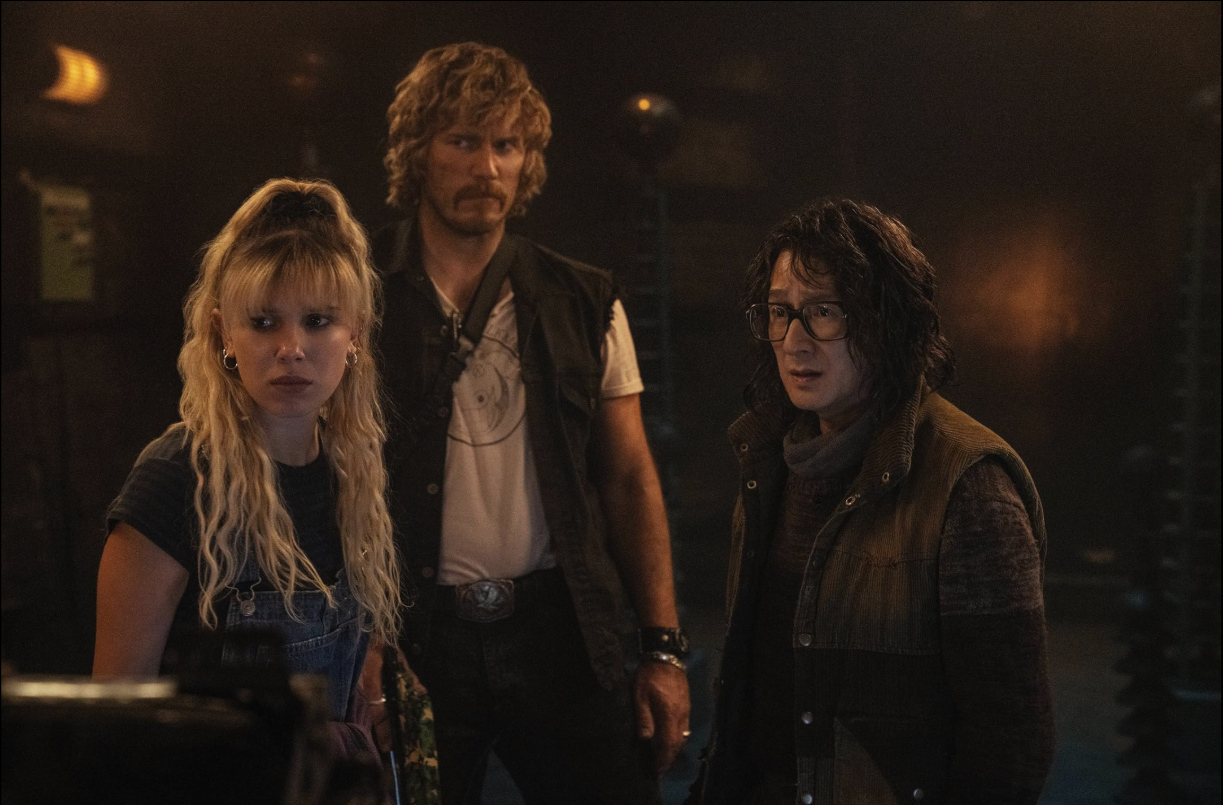
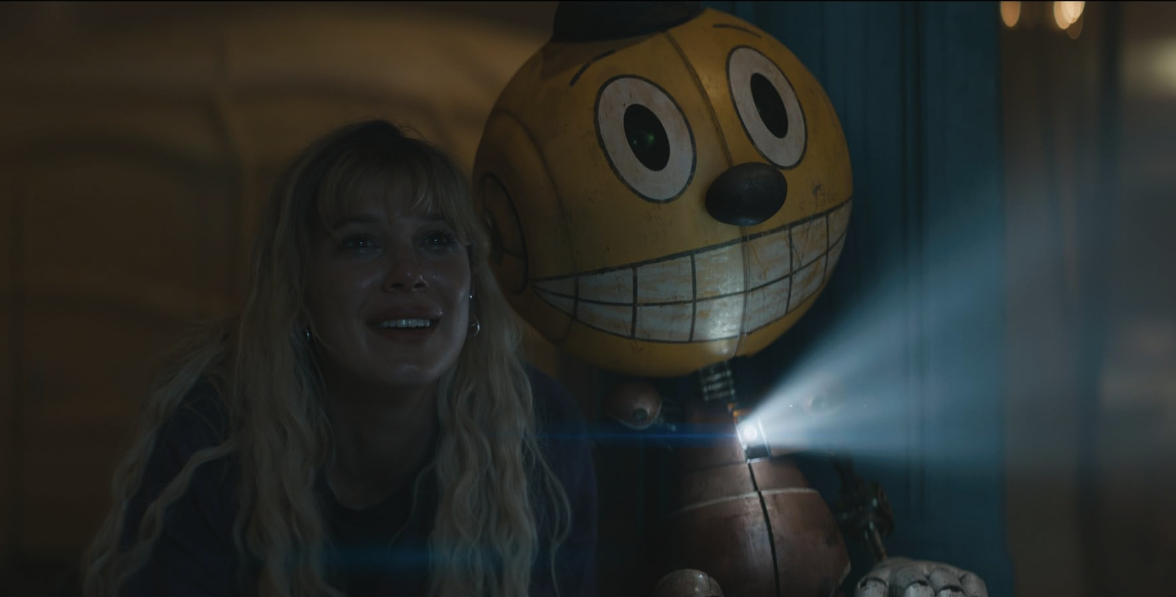
Like a bullet out of a gun, the narrative doesn’t waste any time introducing viewers via archive news reports to a version of the 1990s with an alternate history where a robot uprising has left the world and specifically America a technological wasteland. Millie Bobby Brown stars as Michelle, an orphaned teenager whose humdrum routine is rocked by meeting Cosmo the grinning yellow-headed robot featured in the posters for the film.
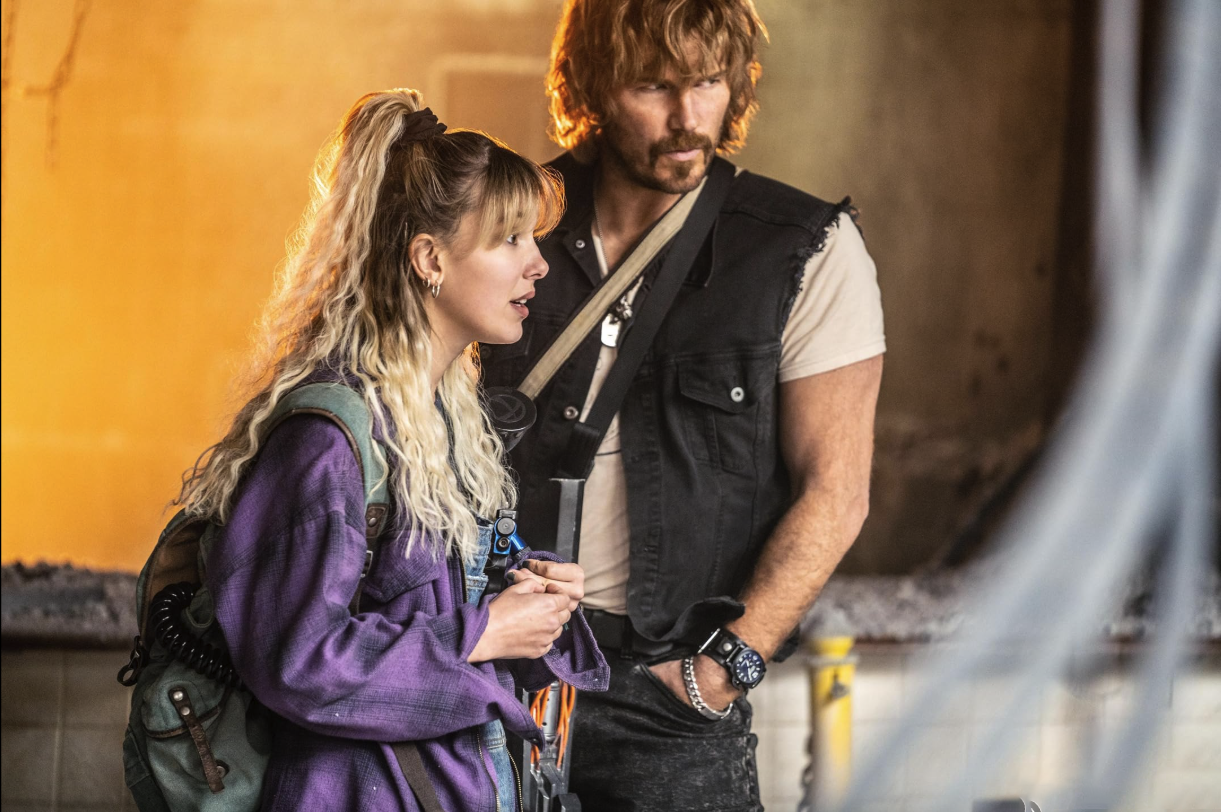
Cosmo convinces her that he can lead to her to find her brother who she thought had died years previously in the same car accident that had claimed the lives of her parents. With the world still at war, this unlikely pair head out on an adventure across America. Constantly on the run they meet an array of colourful characters both human and robot. One such encounter introduces Chris Pratt’s roguish smuggler and war veteran, John D Keats. This meeting becomes a turning point in Michelle’s quest that leads to clues that suggest her brother’s very existence may hold the key to ending all human and robot hostilities forever. With Keats and his robot friend Herman (voiced with gusto by Anthony Mackie) along for the ride, the foursome embark on an even bigger cross country road trip with renewed vigour and a mission to exposure a shadowy global conspiracy.
Along the way Stanley Tucci’s tech mogul emerges as the villain behind proceedings, who will stop at nothing to deter our wandering heroes in their goal to uncover the truth. To say a great deal more about the storyline would enter into spoiler territory.
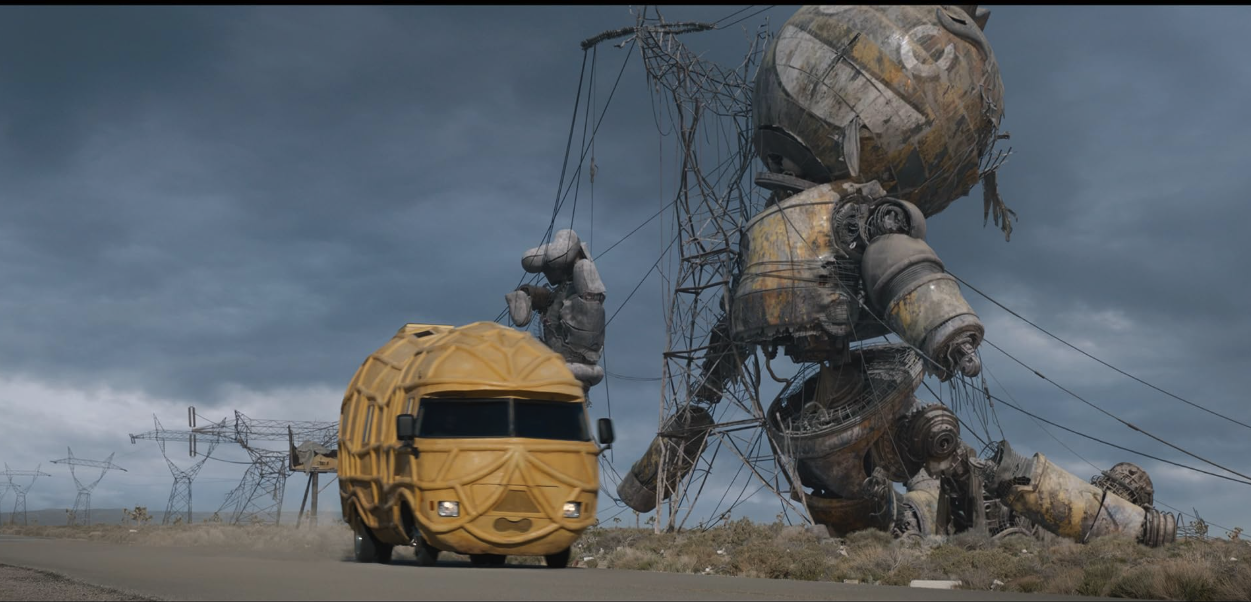
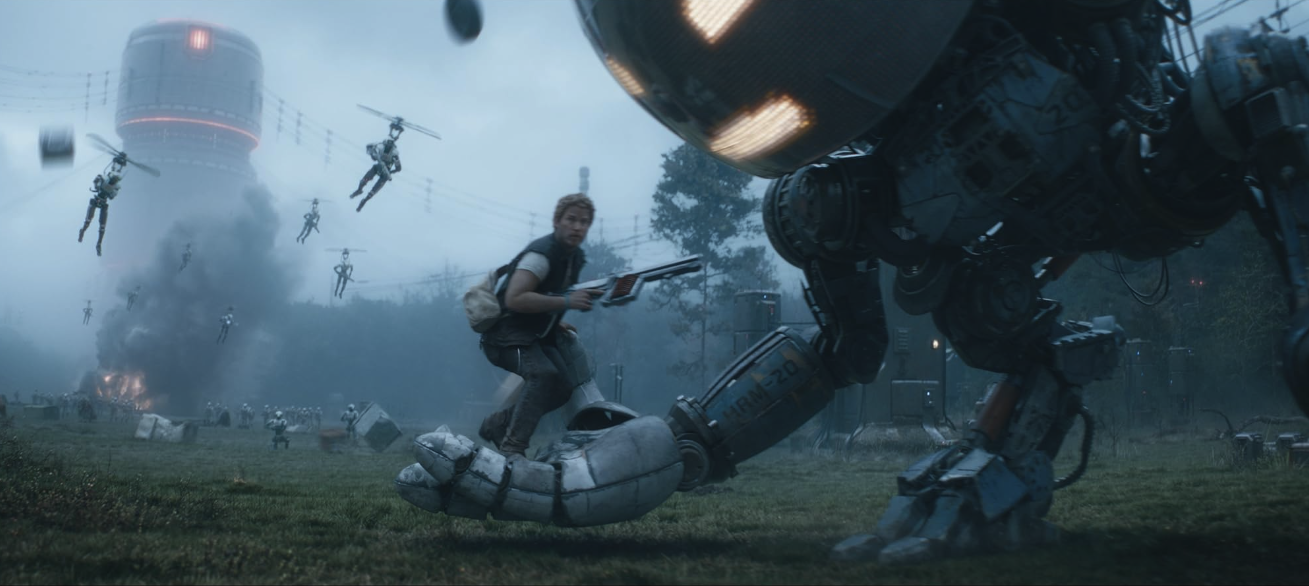
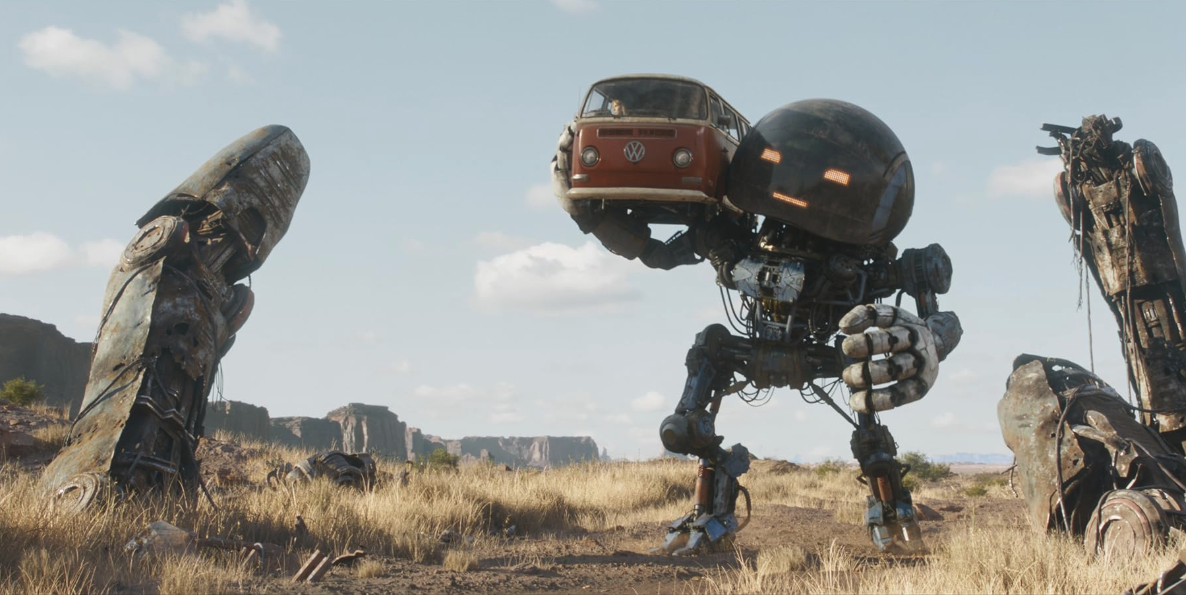
There is much to admire here, as certainly it is easy to see where the reported budget of $320 million has been spent: it is all up on the screen. Visually The Electric State is almost constantly alive with visual effects that truly impress, and even if the repetitive robot battles start to feel a little predictable they maintain just enough invention and pathos to avoid becoming genuinely boring. Stålenhag’s breathtaking landscape paintings too are brought to life with an attention to detail that is to be applauded.
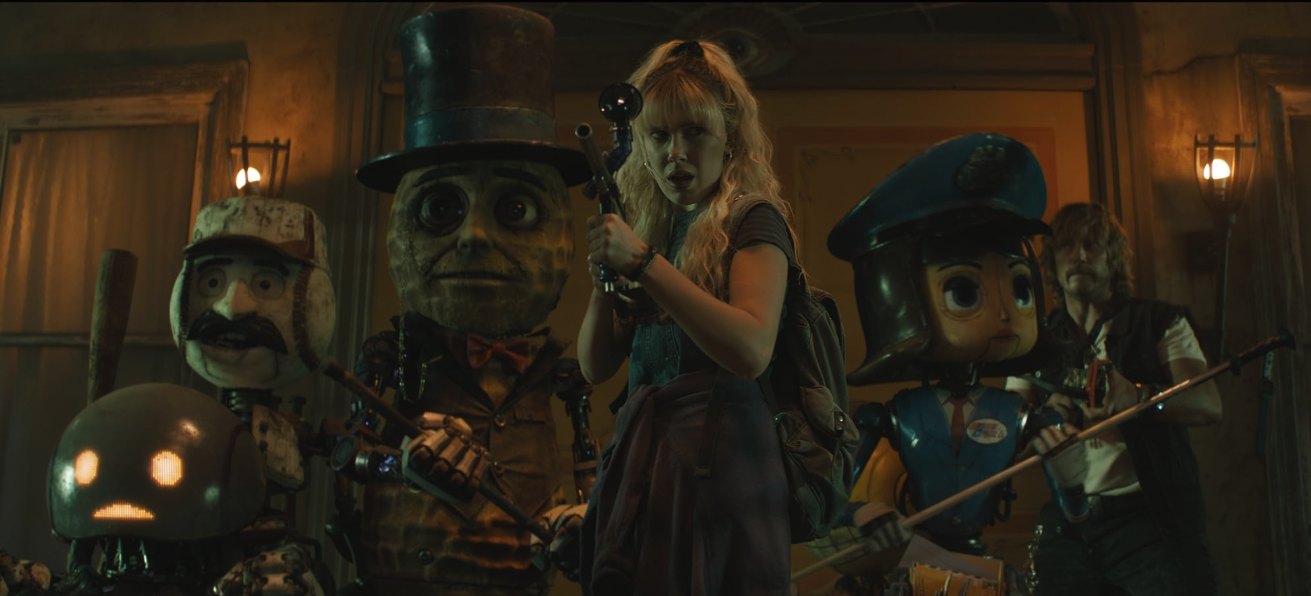
The voice cast that bring the various robot misfits to life are the real stars. Of particular note are the trio of Woody Harrelson as robot leader Mr Peanut, Brian Cox as Popfly and Alan Tudyk as the ever smiling Cosmo. Their combined talents bring a mixture of warmth, humour and at times sinister dread to their characters. The depth and care given to these visually striking robots may leave viewers with the inexplicable urge to revisit 1999’s The Iron Giant or Pixar’s Wall-E.
It is with the human characters where the wheels start to come off and the cracks start to appear. Chris Pratt attempts to channel Han Solo as Keats, but he fails quite miserably to capture any of the charm Harrison Ford so effortlessly brought to his character. Troublingly Pratt’s acting schtick gets so repetitive and familiar that if a Velociraptor or Groot had jumped out from behind the scenery in any of his scenes, it would not have come as a great surprise.
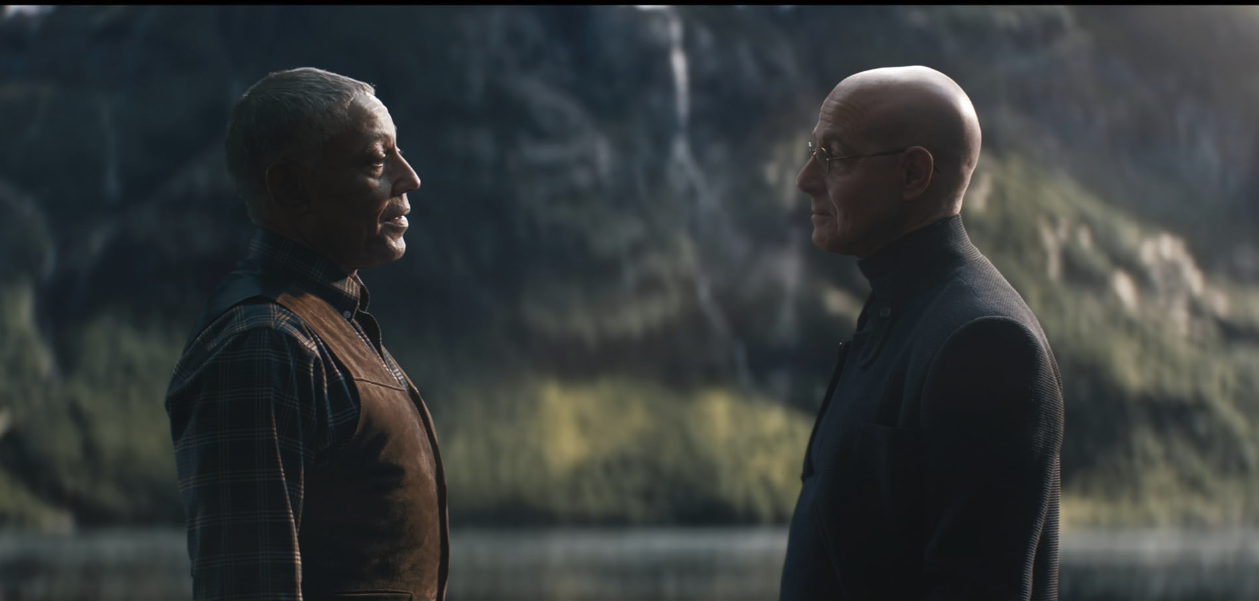
Millie Bobbie Brown also seems all at sea in her role. Gone is the energy or sparky intensity she brought to her role in Stranger Things: Michelle is a morose and hard to like character lacking in any intensity . The problems don’t stop there either. Stanley Tucci is normally good value for money in these types of roles, but here he can’t seem to muster the foreboding terror he usually provides as a villain. His character is just a weak and lazy shouty caricature of real-life billionaires Jeff Bezos or Elon Musk. Unforgivably Giancarlo Esposito is wasted too as a bounty hunter who hunts robots largely because the actor’s expressive features are so frequently covered by a virtual reality headset.
Tonally the film is a jumbled mess. There are sequences reminiscent of ET, while others that conjure up memories of Wes Craven’s best horror work with some effective jump scares. Both work well individually, and with more care could have worked together, but unfortunately they just do not gel on this occasion because of the film’s overall pacing issues.
The heart of the problem lies with the script by Marcus and McFeely. Perhaps adapting such a singularly unique book was asking too much of the duo, and arguably not every story should be adapted by Hollywood. The result is a storyline that jumps all over the place: when it needs to hurry up it slows down, when the brakes need to be applied the foot goes firmly on the accelerator, or occasionally proceedings just grind to a halt without warning.
This inconsistency makes for a jarring viewing experience that with more care could have served to keep audiences on their toes, but instead becomes intensely annoying and ultimately extraordinary frustrating. Once it eventually arrives, the prolonged final act mostly skips along at a brisk pace with a terrific climatic battle sequence and some genuine jeopardy but it is too little too late, and even then it occasionally still stops and starts and shifts scenes at precisely the wrong moments.
At 128 minutes this film is substantially shorter than the likes of Endgame or Infinity War, but it drags along so ponderously in places it makes a couple of hours feel considerably longer.
Thematically there are grave flaws because it is very late to the party. The rise of AI and the rise of technology threatening humanity is nothing new and has been handled far better in the past. 2023’s The Creator was far superior and Spielberg’s underappreciated AI was better. Also the post-apocalyptic road trip movie is a crowded marketplace to create anything terribly groundbreaking. Tom Hank’s Finch, Zombieland or even Netflix’s rival Amazon Studio’s Fallout series have covered the genre with more heart and with more empathetic characters.
For those that may expect one, there are no post credit scenes, and even though the final few seconds before the credits roll may hint at a the possibility of a sequel, it is hard to see a follow-up seeing the light of day.
In the final analysis it is difficult to say how The Electric State will be remembered in ten or twenty years. It is also very hard to say if Netflix will come to regret their investment. All streaming services tend to be a little cagey about such things, and with the nature of streaming it will likely prove even more of a challenge to calculate any “box office” profit or loss figures even after any limited data that may emerge from the company in the future.
It could attract a cult-like following as a flawed masterpiece, but for now though it ought to be considered a bold and valiant experiment, helmed by two gifted filmmakers who creatively bit off far than they could chew.
There are two lessons that could be learned. When a film like Godzilla Minus One can thrill global audiences, win awards and critical plaudits for a fraction of the price, and also go on to generate substantial profits, maybe Netflix should be a little more careful with their chequebook and how they spend their money in future.
Secondly just because Hollywood as a whole believes every book can and should be adapted for the cinema it doesn’t mean that they are right. Some books, and indeed comics, could just be left alone to be enjoyed and read in the medium their creators intended.
The Electric State is not a truly bad film, but it is very far from perfect, and with the Russos’ imminent return to the Marvel Cinematic Universe this may not bode well for a studio that is likely banking its future on the next two highly anticipated Avengers movies.
The Electric State is on Netflix now











You must be logged in to post a comment.