


Graphic Novel Review
Tripwire Reviews Asterix And The Chariot Race

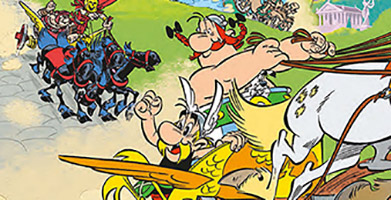
Chariots of Dire
♦ Tripwire’s senior editor ANDREW COLMAN takes a peek at the latest Asterix album, Asterix And The Chariot Race…
 Asterix And The Chariot Race
Written by Jean-Yves Ferri, Illustrated by Didier Conrad.
ISBN: 978-1-5101-0401-3. Orion, £10.99.
There can only be one, possibly two reasons why this latest Asterix instalment has seen print – the need to keep the franchise going, or to ensure the character’s visibility in an ever more burgeoning global marketplace. Sadly the golden age of Asterix ended in 1977, when the series’ writer, Rene Goscinny, died. Together he and artist Albert Uderzo produced 24 albums. After his passing, with Uderzo taking on the writing reins, there have been 14, with ever diminishing returns. And this one, a rather feeble retread of an early volume that itself wasn’t all that great either, (Asterix and the Banquet, or to give it its original French title, The Tour of Gaul) has virtually no connection to the strip’s classic period.
As a typical baby boomer in the 1970s, I grew up reading Asterix, and its Franco-Belgian counterpart, Tintin. Even though the series was not published in English in any kind of chronological order (usually two albums came along at the same time, with one early and one later tale, such as when Asterix and The Goths and Asterix and the Soothsayer appeared on bookshop shelves simultaneously) it was obvious that the classic Goscinny / Uderzo period, even to a preteen, was split into two halves.
The art from Asterix the Gaul to Asterix and the Chieftain’s Shield was more cartoony, with the humour and storylines more focused on affectionate stereotypes (with the exception of the Goths!), while the latter part, from Asterix and The Olympic Games to Obelix and Co. retained some broad humour but added more depth, a far more detailed, developed supporting cast, nuance, brilliantly observed characterization, subtext, historical context, and of course Uderzo’s more virtuoso, beautifully rendered illustrations. The theme of the title became more about the politics between the villagers and the need to retain their Gallic identity or face extinction, with Julius Caesar either deliberately or unwittingly launching a subtle or devious offensive in order to undermine or destroy morale. The five best stories, running consecutively, were – Roman Agent, Switzerland, Mansions of the Gods (my pick as the best of the series) Laurel Wreath and Soothsayer, with the village nearly succumbing to its self-destruction via paranoia, corruption, gentrification, and superstition in most of those. The satire here, unlike earlier episodes, was more literate and subtle, and continues to this day to enthral adults as much as children. Without question these episodes are some of the greatest European comics ever made.
Such high standards were maintained until the duo’s last proper collaboration (I don’t consider Asterix in Belgium to be part of the pair’s canon). Only one post-Goscinny album, Asterix and the Great Divide, evokes any of the magic of the key stories, and even here it is borrowing from earlier tales. So what does all of this have to do with this latest effort? Not much, except that the legacy of this wonderful series shouldn’t be tarnished with a second-generation take that lacks inspiration and fails to capture even a whiff of the series’ original essence. Didier Conrad’s art is a remarkable simulacrum that apes Uderzo’s style so accurately that if you weren’t told, you’d think it was Albert himself. However the artist’s storytelling skills are not on the same level as his forebear, with little variation on each page. And the story, which involves a sponsored race for the honour of Rome that Caesar insists must be won by a Roman is reductive and uninspired. It’s a wee bit of a cynical affair, with no chances taken, and nothing even approaching conversance with or acknowledgement of the series’ triumphs from 40 years ago. Not that Uderzo’s last few albums were much better, however, as the formula resolutely refused to be tinkered with. All in all, Asterix and The Chariot does come across as a paltry exercise in nostalgia. Maybe it’s time to accept that the well has run dry, and make this the closing chapter of that little Armorican village and its inhabitants.
Asterix And The Chariot Race is out now













You must be logged in to post a comment Login