


Film News
Top 5 Digital Signage Predictions Seen In Movies

Signs Of The Future
For organisations that are new to the DOOH industry, digital signage may seem to be rocket science at times. With so many overcomplicated software solutions available, getting confused is easy. Why do I need digital signage? How can you make use of it?
Before you look for answers to these other questions, look at the world of DOOH as viewed through the lens of a camera – movies. For decades, sci-fi films have been producing (and occasionally forecasting) fascinating digital signage software solutions, such as digital billboards and 3D holographic displays. Here are some of the most unforgettable…
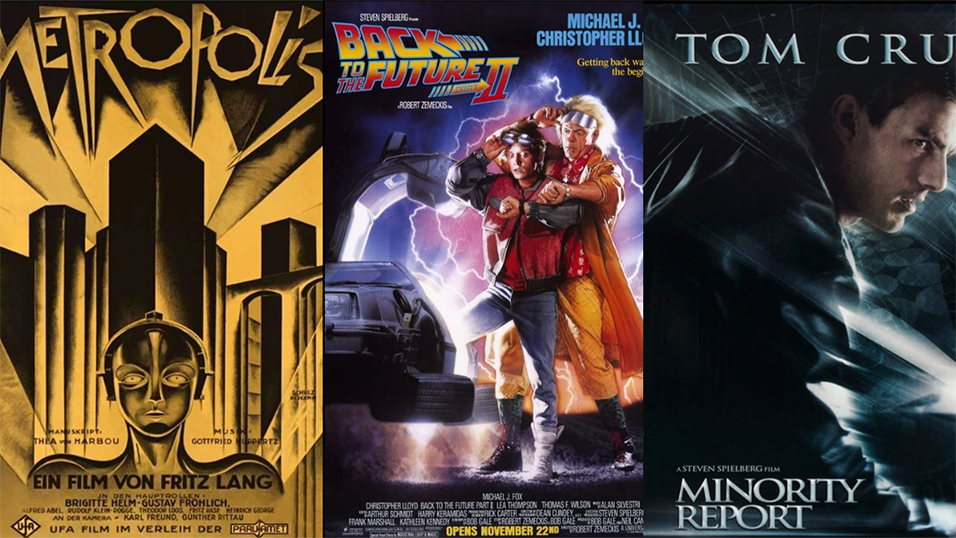
- Metropolis (1927)
This is one of the most innovative films of all time. This masterwork effectively depicted a future dystopia with a running period of 2.5 hours, making it difficult to realize it was filmed almost a century ago. The film’s narrative takes place in Metropolis; a futuristic metropolis separated into two sections: wealthy and poor.
The art deco visual style of the upper city excites architecture and technology that will become a reality barely a half-century later. It is here that the first digital movie signage solution comes on the screen — Joh Fenderson’s office in The New Tower of Babel. It reveals specific critical data that Joh’s employees are unable to examine. Comparable to mid-century machines, the display is a digital signage display presenting company information.
- Blade Runner (1982)
Ridley Scott’s masterwork has earned cult status for a good reason. It was one of the most significant sci-fi maneuvers and fueled the cyberpunk movement. “Blade Runner,” based on Phillip K. Dick’s 1968 book “Do Androids Dream of Electric Sheep?” is set in 2019 and fails to foresee the future for good. The neo-noir aesthetic and neon-lit futuristic Los Angeles, on the other hand, continue to astound audiences to this day.
Digital signage is among the things Scott did right about the urbanistic style. The building-sized DOOH in the opening scene showing some form of advertisement is one of the film’s most memorable scenes. “Blade Runner” may not show the ideal futuristic Metropolis, but it accurately predicted the future of digital cinema signs!
- Back to the Future Part II (1989)
This is another cult film that strove much too hard to construct the future. Marty McFly’s time travel mishaps continued in 2015. Marty and Doc Brown go from 1985 to 2015 to prevent Marty’s kid from destroying the McFly family’s destiny.
The film is too excited about urban tech breakthroughs, yet it falls short of presenting technologies such as flying automobiles or hoverboards. It does, however, hit the target with hands-free gaming and video calls. What’s more bizarre is that Back to the Future Part II has jaw-dropping digital signs. The clip in question displays a 3D-holographic commercial for the Jaws 19 film. The moment the shark hologram “closes jaws” on Marty demonstrates how accurate movie signs can be.
- Total Recall (1990)
Total Recall, directed by Paul Verhoeven, was one of the most costly films filmed at the time, costing $50–65 million. The film, loosely based on the short tale “We Can Remember It for You Wholesale” by Philip K. Dick, is set in 2084 and chronicles the narrative of construction worker Douglas Quaid, who finds himself engaged in espionage on Mars.
Douglas gets lured into a series of events that turns his life upside down, unable to discern if the experiences are genuine or the effect of memory implants. Apart from depicting a somewhat bleak future for our civilization, Total Recall gets several technological concepts accurate. In one of the moments while Arnold’s character is having breakfast with his wife (Sharon Stone), you could see a gorgeous environment outside their window – only to discover it is an advanced digital signage screen capable of displaying realistic dynamic content. This technique is still essential for visual marketers decades later.
- Minority Report (2002)
Adapting Philip K. Dick’s works will never get old for filmmakers. The neo-noir sci-fi action film directed by Steven Spielberg is partially based on the short tale “The Minority Report.” Set mainly in Washington, D.C. and Northern Virginia in 2054, it revolves around PreCrime, a specialist police force that apprehends criminals using foresight supplied by three psychics known as “precogs.” A future paradise with almost no crime turns out to be profoundly flawed.
Captain John Anderton, played by Tom Cruise, attempts to discover the truth when “precogs” foretell he would murder an unnamed individual. Jetpacks hover vehicles, vertical highways, and cinema signs are at their finest. As John Anderton escapes his squad across the mall, the eye-tracking digital signage program detects him, and the displays surrounding him change to deliver targeted adverts. Such interactions are not far from the reality since eye-tracking technology is currently available, and advertisements are becoming more personalized.
Digital signage is one of the most fast-paced technologies. It keeps getting better, and it’s no surprise that it can also be seen in movies. Above are only a few examples, but its application goes way deeper.












You must be logged in to post a comment Login