

Headlines
Adeel Akhtar Talks BBC Drama Sherwood

A Driven Man
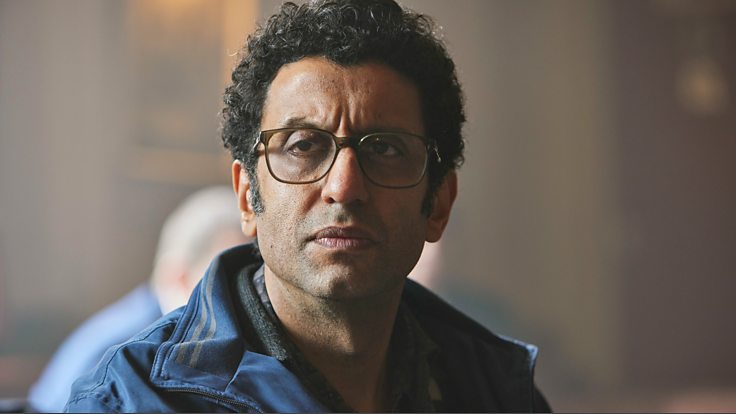
BBC drama Sherwood started this week and here’s one of its stars Adeel Akhtar talking about it…
Adeel Akhtar plays Andy Fisher
Can you tell us a little bit about your character? And what you think of him as well?
I play a guy called Andy Fisher, who is born and bred in Nottingham and he’s a train driver. He’s a hard-working guy, who is probably like a lot of men, in general but also who have grown up within areas with such strong industry roots, he is bound down by a preconceived notion of what it is to be a man.
Do you think viewers will sympathise with Andy?
I think viewers might find an insight into why his masculinity is so brittle, but I think that’s what the whole thing is investigating, for a lot of the characters. There are a lot of quite brittle men, who on the face of it give this outward perception of strength who have been through so much. I think it deals with that really well.
What attracted you to the role?
James Graham, and knowing his work, and knowing that his writing is super nuanced. So this, for example, it’s not a traditional police procedural, he’s just sneaked in these other things, all these huge elements and it’s so multi-layered. He’s really looking at our past, historical past and our reckoning with that and the town he’s from. So, him and knowing that you’d do something like that.
The series examines modern Britain’s social fabric, but it’s also a really compelling mystery crime drama. Can you tell us about how all the elements weave together and how they work together?
It works together by giving you insight into the other thing. So at one point you’re following a thriller and what you think is police procedural and you’re being entertained and you’re trying to work out this mystery, but then you also get a bit of a history lesson into our recent history of how we marginalise certain towns and places in the North Midlands. So, it does this really hard balancing act of entertaining you, but then also, gently giving you a historical understanding of past and injustices and not one suffers. Usually it’s one thing sacrificed for another, and if it’s got a social message you think, oh god ease up, but this is not like homework TV.
Did you know much about the events that the drama is based upon?
I knew, obviously about the miners’ strike, but I didn’t know that there were people who were bussed in from other mining towns to work and to cross the picket line. I didn’t know that the tensions between all these different mining towns were so fraught, and I didn’t know that it was agitated by the government. I just didn’t know any of it. All I had was a broad understanding of the strike.
What kind of research did you do?
I felt like the piece itself and the scripts gave you all the information you needed, about the past events that occurred and that unfold in the story. I worked quite heavily with the dialect coach just to get the Nottinghamshire dialect down, there was a lot of work on that and that was my main focus.
Community is a big theme in the drama. How does your character fit within the community we explore?
He’s one of those people who are on the fringes of a community and who see themselves on the fringes of society as a whole. Whereas the other characters in the piece are interconnected in some way, either working in the mines or married or married to the sister of the person who lives next door. Andy is on the fringes of that. There’s a couple of interactions that he has with the other characters, who invite him to his son’s wedding (my son in Sherwood is played by Bally Gill who gets married to Jo Froggatt’s character.) He is peripheral to that community, someone who sees themselves on the margins.
Sherwood tells a story and history of a very specific place and moment. But there are lots of universal elements within the series, do you think it will resonate with viewers? And how do you think it will resonate with viewers now, politically, socially?
Yeah, I think will resonate with viewers because the miners’ strike is something that happened in recent history and this story illustrates and explores how frustrated people within the community can feel if they are overlooked. And that is something that is not just specific to people from mining communities, I think it’s just people who feel like they’re marginalised in general. I think it speaks to that and the frustration that those people who belong to such communities feel.
There’s this really lovely spot in Sherwood where they’re all just sat around in the Working Men’s Club, and they’re just chatting about that exact thing. They were overlooked during the Miner’s Strike, and they’re still overlooked now, and that’s cast quite a long shadow over a community of people.
What was it like filming with the rest of the cast?
I kind of lost my mind a little bit! Because every single one of them, bar none, I would have seen doing something growing up as an actor, I would see them on TV. So it was just such a privilege to be asked to do it, and then to call these people my colleagues just blows my mind a little bit. There are some real legends there. It’s still hard to get my head around the fact that I was sharing a green room with Lesley Manville, just chatting over tea and biscuits.
Jo Froggatt and Bally as well. The actors who are older or more experienced or have seen on TV, that was one thing, but then you’ve got this next wave of younger actors that are coming through, like Bally and Perry Fitzpatrick and some of the even younger cast. It was a really lovely feeling on set because you had it all.
The series also stars your brilliant Ali & Ava and Enola Holmes co-star Claire Rushbrook.
The crazy thing was during Enola Holmes we were auditioning and waiting on the chemistry test for Ali & Ava, and I walked into make-up for Enola Holmes and Claire walked in and she was on my left, and she wouldn’t talk to me because of the chemistry test! Sometimes when you’re a make-up chair, you’re like, “Alright, how’s it going?” And she wouldn’t talk to me because a bit later, maybe a couple of days later, she was chemistry testing with me for Ali & Ava. And then that was it, we were in Ali & Ava and now we’re in Sherwood together, so that was three jobs in a row, but sadly we have no scenes together in Sherwood.
It is James Graham’s most personal work so far, how closely have you worked with him and Director Lewis Arnold on your time on the project as well?
Lewis was the first person I saw for rehearsals, and general chat. And James was there for a for a couple of chats as well. Immediately I think we all understood the tone of what we were going for. So we just quite quickly all settled into this common understanding of the sort of story we were telling, it was brilliant.
Is there anything that you hope audiences will take away from the drama?
I hope that they’re invited to the idea of change and breaking historical cycles of marginalisation, where people have felt on the edges of society. And I hope it brings about people’s awareness that change is possible.










You must be logged in to post a comment Login