

Headlines
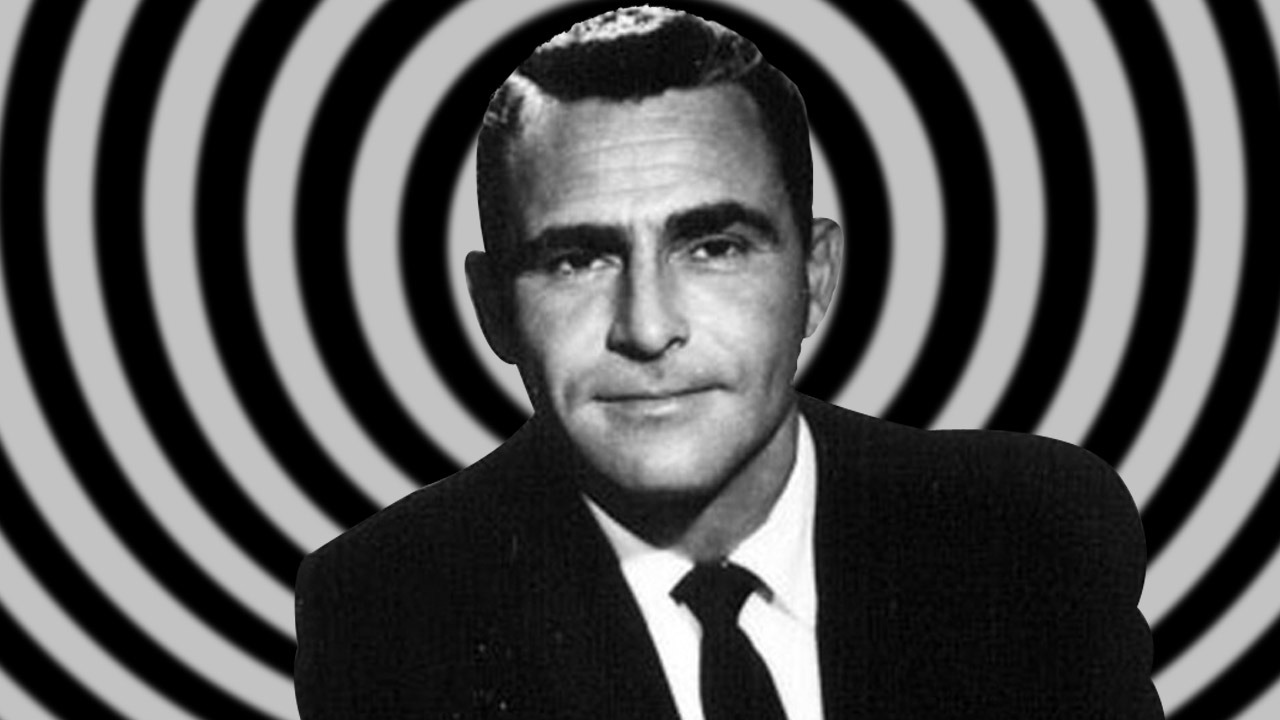
30 Screenwriting Lessons From The Twilight Zone’s Rod Serling

How To Be A Better Writer
♦On Tripwire, we love the craft of film and TV writing and so when we found this, run over at MovieMaker.com which outlines Twilight Zone creator Rod Serling’s tips for writing, we just felt we had to share it with everyone here. Commentary after each quote comes from MovieMaker.com…
1. “Being like everybody is like being nobody.”
If you simply try to emulate other writers, you won’t stand out on your own. If you try to copy scripts and movies that have already been successful, your work won’t stand out either. You need to showcase what you can bring to the industry, not how you can write like the others.
2. “Every writer is a frustrated actor who recites his lines in the hidden auditorium of his skull.”
When you’re writing dialogue, you need to truly see and hear the words come to life, even if it’s through your own mind’s eye or under your breath. Some of the best screenwriters will act out their dialogue in the comforts of their solitude while writing. This is how you can discover whether such dialogue will play well onscreen or if it’s simply being used as bad exposition.
You the writer need to take on those roles as an actor would.
3. “What you feared would come like an explosion is like a whisper. What you thought was the end is the beginning.”
Screenwriters wait and wait for that inspirational moment to come, often leading to endless months, sometimes years, of waiting. The best ideas come like whispers in the night. They could be a single visual, a line of dialogue, a character trait or arc, etc. Don’t wait for some big explosion of inspiration. Listen.
4. “Coming up with ideas is the easiest thing on earth. Putting them down is the hardest.”
Everyone has movie ideas. Almost everyone believes those ideas are brilliant. While concept is everything in Hollywood, what really matters is the implementation of those brilliant concepts. Stop talking about the many great concepts you have. You certainly can’t sell them as pitches without a script (unless you’re an established and successful figure in Hollywood). You need to do the hard work and write the scripts.
5. “If you need drugs to be a good writer, you are not a good writer.”
A common misconception—whether it’s for writing novels, plays, short stories, poems, movies, or songs—is that the best material often comes from a mind opened or unleashed by outside elements like alcohol and drugs. We’ve read plenty of interviews and biographies pointing to these iconic writers and musicians that conjured their works from drug or alcohol-induced hazes. But the truth is, all you need is an excellent imagination and the courage to do the work.
6. “Imagination: Its limits are only those of the mind itself.”
The only person limiting your imagination—when coming up with concepts and figuring out creative solutions to problems within your scripts—is yourself. Apply your mind to tap into the possibilities.
Writing matters. What you’re trying to do as a writer—whether it’s writing a novel, a song, a film, or television show—has purpose and can be a weapon of expression and change.
8. “The writer’s role is to menace the public’s conscience. He must have a position, a point of view. He must see the arts as a vehicle of social criticism and he must focus on the issues of his time.”
Serling often injected important messages into his work, albeit hidden behind the veil of science-fiction, horror and suspense. Your writing should have perspectives on what is happening in the world around you. You can use your engaging stories and characters to communicate that.
The best adaptations are not those that convey every moment in the source material. It’s about finding the core essence of it and translating that into the visual medium.
10. “Most screenplays, most motion pictures, owe much more to the screenplay.”
Can we get an Amen! to that, brothers and sisters in screenwriting?
11. “This is, if not a lifetime process, awfully close to it. The writer broadens, becomes deeper, more observant, more tempered, much wiser over a period of time passing. It is not something injected into him by a needle. It is not something that comes on a wave of flashing, explosive light one night and say, ‘Huzzah! Eureka! I’ve got it!’ and then proceeds to write the great American novel in 11 days. It’s a long, tedious, tough, frustrating process, but never, ever be put aside by the fact that it’s hard.”
There are no overnight successes. When the media tries to portray that in their headlines they leave out the fact that the now successful writer likely survived over a decade or more of failure.
If you’re not ready for that, this dream might not be for you.
Ideas are an amalgam of your experiences in life—what you love, hate, fear, treasure, what makes you laugh, what makes you cry.
You need to be by yourself. You need to eradicate distractions when you’re writing and sometimes that means forcing yourself away from family, friends, and even jobs. It’s a dedication that you don’t necessarily love and embrace, but that which you succumb to because deep down, it’s who you are.
14. “A basic ‘must’ for every writer: A simple solitude—physical & mental.”
Your chosen profession or goal calls for you to be able to disconnect from the outside world—physically and mentally—and leap into the one that you’re creating.
15. “If you’re a good writer and deserve that honored position, then by God, you’ll write, and you’ll be read, and you’ll be produced somehow. It just works that way. If you’re just a simple ordinary day-to-day craftsman, no different than most, then the likelihood is that you probably won’t make it in writing.”
Some are meant to be, and others are not. Regardless of which of those categories you fall under, at least you tried.
16. “You can be a hunchback and a dwarf and what-all. If you write beautifully, you can write beautifully.”
It doesn’t matter how old or how young you are, what color skin you have, if you’re rich, poor, or somewhere in between. It doesn’t matter if you live in Los Angeles, New York, Wisconsin, South America, Asia, Africa, Europe, Australia, or wherever. If you write beautifully, no one can take that away from you. And if you are creative and persistent, that work will be recognized.
17. “We think euphemistically that all writers write because they have something to say that is truthful and honest and pointed and important. I suppose I subscribe to that, too. But God knows when I look back over 30 years of professional writing, I’m hard-pressed to come up with anything that’s important. Some things are literate, some things are interesting, some things are classy, but very damn little is important.”
This is coming from one of the greatest and most revered writers in history. Be humble.
18. “When that paper is rejected, in a sense, a sizable fragment of the writer is rejected as well. It’s a piece of himself that’s being turned down.”
This is why rejection hurts so bad. It’s not just the writing being rejected. It’s our souls, too, because that’s what screenwriters give—or should give—to each and every script. A piece of them.
19. “If it sounds good as you say it, likely as not it’ll sound good when an actor’s saying it.”
Wise words when it comes to dialogue. Writers need to say those words, preferably in the manufactured mindsets of their characters. Either do it under your breath in the coffee shop or find an empty room and act it out. This process will not only change your dialogue for the better, it will change every aspect of your writing.
20. “I choose to think of TV audience as nameless, formless, faceless people who are all like me. And anything that I write, if I like it, they’ll like it.”
Set out to entertain yourself. You can’t possibly know how millions of other people are going to react—or even how a handful of Hollywood contacts reading your script will. But you can go in knowing that there are millions of people out there that like the movies you like.
Your first paycheck is magical. There’s no feeling like it.
22. “I remember the first sale I made was a $150 for a radio script, and, as poor as I was, I didn’t cash the check for three months. I kept showing it to people.”
It’s not just about the money.
23. “I would guess that the price of the script really is secondary. The credit is much more the essence.”
Money can—and will—be spent. Credits lasts forever and mean the most to those holding the keys to the kingdom.
24. “There are a lot I’m proud of, and a lot I wish the hell I’d never written.”
You will write some terrible scripts, make no mistake. It’s a guarantee. The real secret to success is learning to tell the difference between what is great and what is horrible, and everything in between.
25. “I’m an affluent screenwriter and all that—I’m a known screenwriter, but I’m not in the fraternity of the very major people. I would say a guy like Ernie Lehman, William Goldman, and a few others are quite a cut above.”
Again… be humble.
26. “There are millions of ways to not be writing.”
No excuses.
27. “Ideas come from the Earth. They come from every human experience that you’ve either witnessed or have heard about, translated into your brain in your own sense of dialogue, in your own language form. Ideas are born from what is smelled, heard, seen, experienced, felt, emotionalized. Ideas are probably in the air, like little tiny items of ozone.”
28. “Somehow, some way, incredibly enough, good writing ultimately gets recognized. If you’re a really good writer and deserve that honored position, then by God, you’ll write, and you’ll be read.”
A truth floating around in Hollywood today—the cream will rise. If you’ve honed your craft, if the concepts are original, if the delivery is solid, and if you have your own voice—the cream will rise.
29. “I have never written beneath myself. I have never written anything that I didn’t want my name attached to. I have probed deeper in some scripts and I’ve been more successful in some than others. But all of them that have been on, you know, I’ll take my lick. They’re mine and that’s the way I wanted them.”
Whether it’s good, bad, or somewhere in between—own your writing.
When you embark on that next screenplay, you are exploring The Twilight Zone. Most people don’t understand it. Most people don’t understand how, where, and why writers get their ideas. They don’t understand how they conjure those characters. This is where we go—The Twilight Zone. We create sounds, visuals, and we affect the mind of the audience and reader. We do so by sometimes taking them into the shadows to thrill or frighten. We accompany that by injecting substance, ideas, and notions.













You must be logged in to post a comment Login