

Film News
10 Things We Learnt About Christopher Nolan And Dunkirk

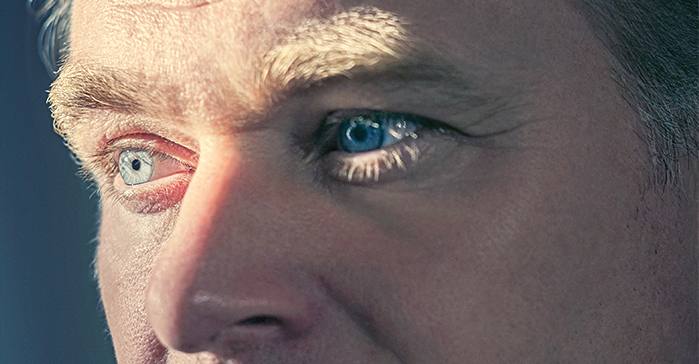
A Modern Auteur
♦ Over at Variety, they have just run a hefty feature on director Christopher Nolan, whose Dunkirk won plaudits earlier this year, so here’s 10 things we learnt about the acclaimed director from the piece…
- Nolan explains why Dunkirk had to be released during the summer: “We saw it as a blockbuster. It’s a strange [term] to use in relation to the subject matter, but we saw it as an entertainment, albeit one that’s intense and suspenseful. We wanted it to reach the widest audience possible, and that happens in summer.”
- He didn’t see this as a war film: “I didn’t view this as a war film. I viewed it as a survival story.”
- He watched Steven Spielberg’s Saving Private Ryan before he made Dunkirk:”“The film has lost none of its power. It’s a truly horrific opening, and there are later sequences that are horrible to sit through. We didn’t want to compete with that because it is such an achievement. I realized I was looking for a different type of tension.”
- Nolan realised that Dunkirk was going to be a different sort of film to Saving Private Ryan: “I needed suspense, and the language of suspense is one where you can’t take your eyes from the screen. The language of horror is one where you hide your eyes. You’re looking away. It’s a different form of tension. We constructed our set-pieces not around violence, not around blood, but around physical jeopardy.”
- The director does see a difference between film and television: “I view movies and television as different, and the conventional thinking right now is that they must converge and become the same thing. A scenario in which movies and television become more similar elevates television but diminishes movies.”
- Nolan did have a run-in with Netflix, who he called their decision to release projects straight to subscribers rather than release in the cinemas mindless but his attitude to them has softened in retrospect: “I should have been more polite. I said what I believe, but I was undiplomatic in the way I expressed it. I wasn’t giving any context to the frankly revolutionary nature of what Netflix has done. It’s extraordinary. They need appropriate respect for that, which I have.”
- He still believes that the distribution model for movies is one that continues to work: “Every other industry, whether it’s the car industry or whatever, controls when a product is launched. The idea that the film business should forget that and just throw everything together at the same time makes no sense. It’s not good business, and people will realize that eventually.”
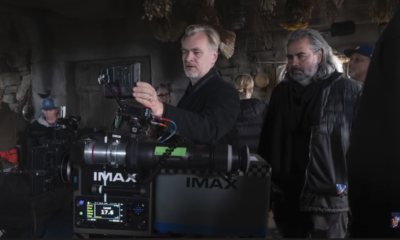
- Nolan doesn’t have a director’s chair on set: “The crew doesn’t have chairs, so for me to sit there when everyone else is on their feet would feel inappropriate. The crew feeds off your energy. They feed off your pace. If I’m sitting around waiting for things to happen, the energy level drops.”
- The director prefers to use old-school techniques to shoot his films sometimes, as he used miniatures in Dunkirk rather than create them with CGI: “The older techniques are working better. With visual effects, after a while the contemporary tricks look cheaper. The audience’s eye is ruthless.”
- Filming in Dunkirk gave the film an extra resonance for him:“I was stopped on the street by a local one day, and he gave me a button from a British soldier’s uniform. It brings it all home in such an
immediate way. This button and not knowing what happened to the person who wore it. I’d like to think he made it home and carried on with his life, but there’s no way of knowing.”
Here’s Variety‘s piece in full
Variety Christopher Nolan Feature
And here’s our review of all of his films from earlier this year











You must be logged in to post a comment Login